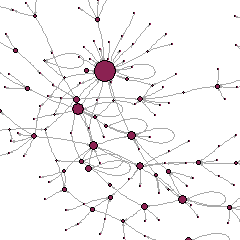
After years of work, the long-awaited good news: my article ‘Uninvited Protagonists: The Networked Agency of Venezuelan Platform Data Workers‘, co-authored with Juana Torres-Cierpe, has just been published in New Technology, Work and Employment!
Workers in Venezuela are powering AI production, often under tough conditions. Sanctions and a deep political-economic crisis have pushed them to work for platforms that pay in US dollars, albeit at low rates. They constitute a large reservoir for technology producers from rich countries. But they are not passive players.
They build resilience, rework their environment, and sometimes engage in acts of resistance, with support from different segments of their personal networks. From strong local ties to loose online connections, these informal webs help them cope, adapt, and occasionally push back. Their diversified relationships comprise an unofficial and often hidden, albeit largely digitised relational infrastructure that sustains their work and shapes collective action.
These findings invite to rethink agency as embedded in workers’ personal networks. To respond to adversities, one must liaise with equally affected peers, with family and friends who offer support, etc. Social ties ultimately determine who is enabled to respond, and who is not; whether any benefits and costs are shared, and with whom; whether any solution will be conflictual or peaceful. Social networks are not accessory but constitute the very channel through which Venezuelan data workers cope with hardship.
Not all relationships play the same role, though. Venezuelans discover online data work through their strong ties with family, close friends, and neighbours. To convert their online earnings into local currency, they rely on their broader social networks of relatives and friends living abroad and indirect relationships with intermediaries. For managing their day-to-day activities, Venezuelans expand their social networks through online services like Facebook, WhatsApp, and Telegram, connecting with diverse and less-close peers within and outside the country. Different social ties affect the various stages of the data working experience.
Overall, no Venezuelan could work alone – and the networked interactions that sustain each of them against hardship have made them massively present, as ‘uninvited protagonists,’ in international platforms. Their massive presence in the planetary data-tasking market is a supply rather than demand-driven phenomenon.
This analysis also sheds light on the reasons why mobilisation is uncommon among platform data workers. Other studies noted diverging orientations of workers, unclear goals, lack of focus, and insufficient leadership. Another powerful reason hinges upon the predominance of weak ties in building up online group membership: indeed, distant acquaintances are insufficient to prompt people to action if their intrinsic motivations are low.
The article is available in open access here.

 Data Big and Small