Data work in Egypt: Who builds AI behind the scenes?

We know this now: artificial intelligence is not only a Silicon Valley product. When trying to look further, research and the media have found AI’s “hidden workforce” (the data workers who label images, transcribe audio, and evaluate content to train machine learning models) in countries like Kenya, the Philippines, Venezuela, and Madagascar.

In a new study, led by Myriam Raymond and with the collaboration of Antonio A. Casilli and Lucy Neveux, we lift the veil on data work in Egypt. Over 600 questionnaires, 15 focus groups, and an online ethnography reveal the substantial contribution of this country to AI technologies produced and marketed overseas. Egypt’s position in the global AI supply chain is unique, as it serves technology companies both in the Western world (Europe and North America) and in China, often through intermediaries based in the Gulf.
As already observed in other countries, these workers are mostly young: three quarters are below 34 years of age. They live mostly in urban areas. They are also highly educated: in particular, three out of five have an undergraduate degree in science or technical fields. Another notable similarity concerns low pay and lack of protections. We find that four out of five data workers undertake this activity out of financial need, and they spend the income earned in this way immediately on rent, food, and clothes. On average, though, data work pays less than half the country’s monthly minimum wage, and earnings are highly volatile.

The gender gap is more acute than observed elsewhere. Three workers out of four are men. The few female data workers are more dependent on this activity: data work is the only job for two out of ten of them (against one in ten men). Women face unique barriers, reflecting locally-grounded cultural constraints and concerns about online safety.

More generally, culture and morals play an important role in the perceptions that Egyptian workers have of their activity – in ways that had not emerged so forcefully in other countries before. Data tasks sometimes conflict with their principles and beliefs, prompting them to continually question and, at times, reshape their digital identities.

Read the full report here.

Organising AI data workers: barriers, alternatives, and ways forward

The work that fuels AI – from data labelling to content moderation, output checking, red teaming, and so on – is typically outsourced. Digital platforms that operate as online marketplaces play a pivotal role in making this possible. They extend outsourcing to individuals, removing the informational bottlenecks that previously limited it to (multi-person) firms. Platforms treat workers as independent contractors and do not guarantee labour rights. Job insecurity, income volatility, wage theft, and in some cases mental health issues, are common. However, cases of worker mobilisation remain rare. Why, and how can this be changed?

Barriers

A specific challenge that arises on platforms is the asymmetric distribution of work, with a relatively small number of users doing most tasks, and a long tail of minimally-active (or even inactive) people. The reason is that registration is (more or less) open but demand is variable, so that a worker must beat the competition to find tasks to do. This has two main implications. One is that from start, there is an incentive to see other workers as competitors rather than colleagues. The other is that it is difficult to motivate people in the long tail to take action: they are more likely to exit than to voice their grievances.

Lack of a shared worker identity is another crucial gap. Data work was initially portrayed as simple and straightforward, and even sometimes considered as a form of consumption or leisure. Many platforms carefully avoid even using the word ‘worker’, instead preferring terms like ‘Turkers’ (Amazon Mechanical Turk) or ‘Tolokers’ (Toloka). The very fact that workers themselves often take the rhetoric of simple tasks at face value, and struggle to see themselves as such, is indicative of their experience of disrespect, due to widespread misrecognition.

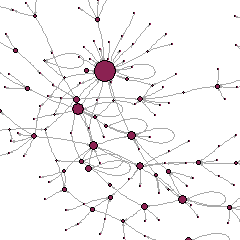
Juliet Schor writes that “platform earners are not only independent in a legal sense; they also typically do their work independently of other workers”. Technology enables extreme fragmentation of labour and rules out teamwork. Neither do workers ever meet their clients (technology producers), due to platform intermediation. In sum, platform data work isolates workers both from their peers and from other stakeholders (as the above picture cleverly represents). How to organise if you are alone?

Alternatives

In this context, it is useful to broaden our understanding of worker organisation. Beyond collective acts undertaken within an institutionalised framework, we should also embrace informal, unorganised and subtle actions, which can nevertheless lead to positive outcomes.

In crisis-stricken Venezuela, very large numbers of people started data work on online platforms to earn much-needed hard currency. Here, workers have leveraged their personal networks of family and friends to surmount the multiple obstacles posed by platform work. They never created any official organisation, and their actions would rarely qualify as forms of resistance. Some were mere attempts to limit losses in a harshly competitive environment. As researchers, we need to be mindful of cases in which, owing to an unfavourable context, workers prioritise the (short-run) need to counter local scarcity through online earnings, rather than any (longer-run) fight against unfavourable platform management. (More on this case here.)  

Ways forward

There are nevertheless signs that successful strategies exist. Kenya is a rare example of organisation: data workers and content moderators in this country initiated actions that attracted international attention and, as in a virtuous circle, support. Of course, not all is easy for them, but Kenya is now a reference, an example for everyone else. This suggests that it is essential to give visibility to workers’ conditions and to any action they undertake to defend their rights.

The other lesson learned from the Kenyan case is that collaborations between multiple stakeholders can achieve a lot in supporting workers and triggering change. Not only established unions, but also researchers, policymakers, and activists in various NGOs (for example, engaged for personal data protection, against discrimination, etc.) can act as multipliers of the resources available to workers.

American AI, made in Venezuela

The political tensions between Venezuela and the United States are at an all-time high, after news of strikes on Caracas and the alleged capture of President Maduro and his wife. The recent escalation follows years of economic sanctions and a deep divide between the two countries.

And yet, Venezuela has massively supplied cheap data work to US-based technology producers throughout all these years. Through digital labour platforms, an educated but impoverished workforce made its way to (the bottom of) the supply chains of US-directed artificial intelligence (AI).

Since about 2017, high inflation, increasing scarcity of even basic goods, and widespread poverty have pushed Venezuelans to work for international platforms that pay in US dollars, albeit at low rates. They have come to constitute a large reservoir for technology producers, mainly (though not only) in the United States. Known for their willingness to accept even the lowest pay rates in the data work market, Venezuelan workers have annotated hundreds of thousands of videos and images for the development of (for example) self-driving vehicles. Ironically, the very policies of Chavist governments – from Chávez himself to Maduro – made this possible. Cheap access to electricity and promotion of digital literacy, including through the widespread distribution of locally produced computers (‘Canaima’) to students and schoolchildren, provided people with the necessary infrastructure to perform data work. Even outdated and malfunctioning, these equipments played a crucial role in enabling widespread Venezuelan participation to the AI pipeline.

Nicolas Gourault (2020). VO: A documentary and sensory investigation about the role of human workers in the training of driverless cars. Source: https://nicolasgourault.fr/films/vo

For Venezuelan workers, platforms labour has constituted a a resilience strategy against adverse local conditions. Participation has never been easy owing to frequent power cuts, slow internet connection, and aging devices, not to mention the difficulty of working almost entirely in English. The high educational levels and computing skills of many workers (including experienced professionals and science/technology students), and embeddedness in densely knit networks of support offered solutions. At the same time, work on platforms is not without challenges, and all Venezuelan data workers have experienced some form of disrespect. Being paid less than peers in neighbouring countries, or even being offered fewer tasks than these foreign peers, are examples of this. At some point, they had to endure a widespread perception that they do not work well. Resisting against international platforms can be more challenging than bypassing local restrictions, and Venezuelan workers limited themselves to occasional acts of minor cheating involving only very few of them.

Venezuelans’ resolve to move out of the crisis and the networked relationships that sustain each of them against hardship have made them massively present, as ‘uninvited protagonists,’ in international data work platforms. Conversely, some AI companies and platforms (from the Global North in general, and from the United States specifically) targeted Venezuela deliberately, not much for the qualities and skills of its highly educated population, but for its low cost at a time of crisis. These platform-mediated encounters enabled short-term solutions, but haven’t raised Venezuela out of poverty, and haven’t ensured a durable provision of high-quality data for AI.

What comes next inside Venezuela is deeply unclear, but unfortunately, nothing (for now) suggests any recognition of the role of these workers in the technology industry, or any opportunity to reshape its outputs in more equitable and respectful ways.