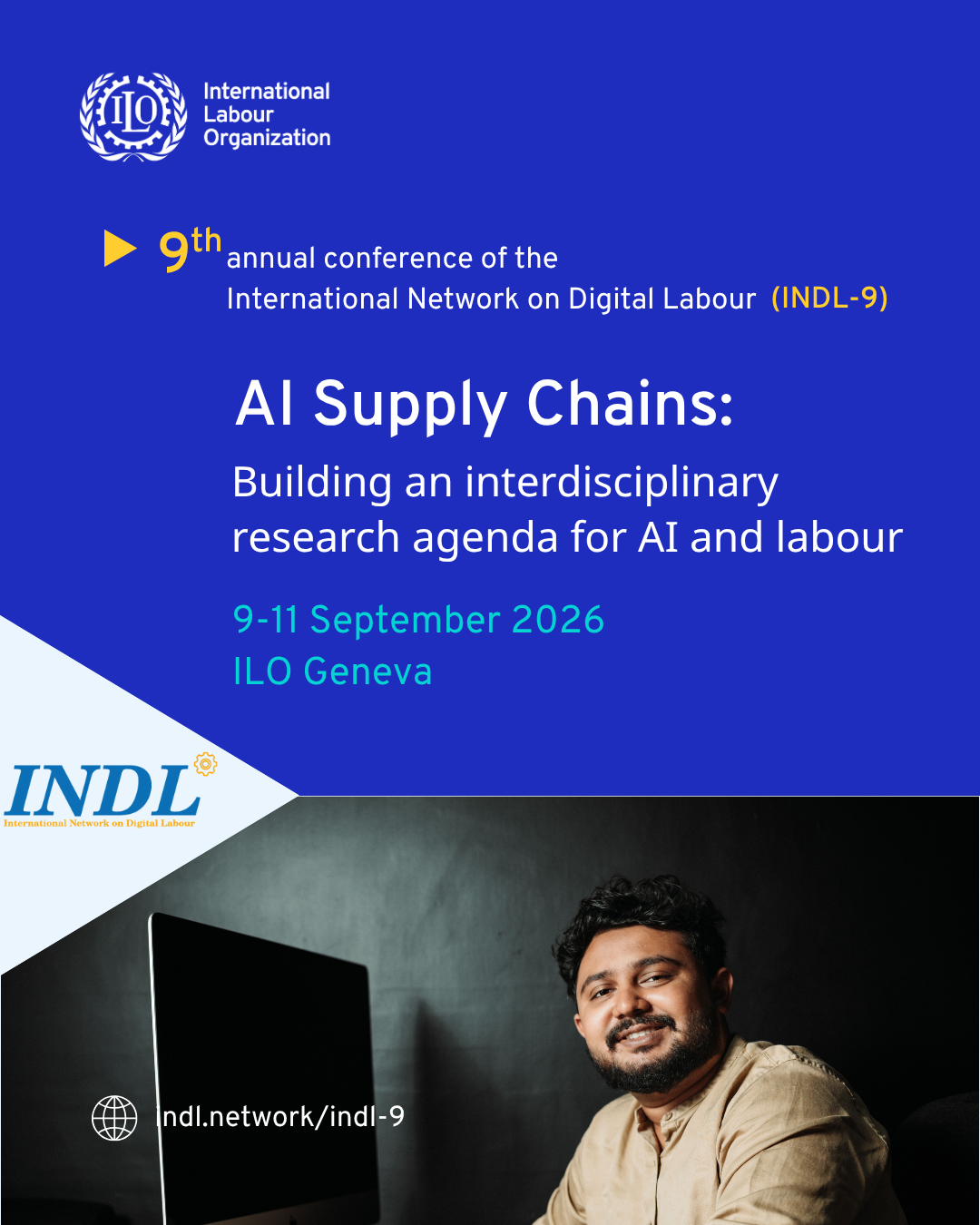
I have just come back from three most stimulating days at the ninth conference of the International Network on Digital Labor (INDL-9), which took place in beautiful Geneva on 9-11 September 2026.
With a small group of like-minded researchers, we launched INDL back in 2019 as a small-sized initiative, evolving from the original idea of a European network informally created in 2017. The format was still tentative, the community still a bit dispersed, and one year later, the pandemic threatened the survival of the initiative. We continued online, and in 2022, we returned in presence and inaugurated the format and structure that have remained the same since then. Since then, the conference has progressively grown, and a community of “core” participants has emerged together with the many who discover INDL every year.
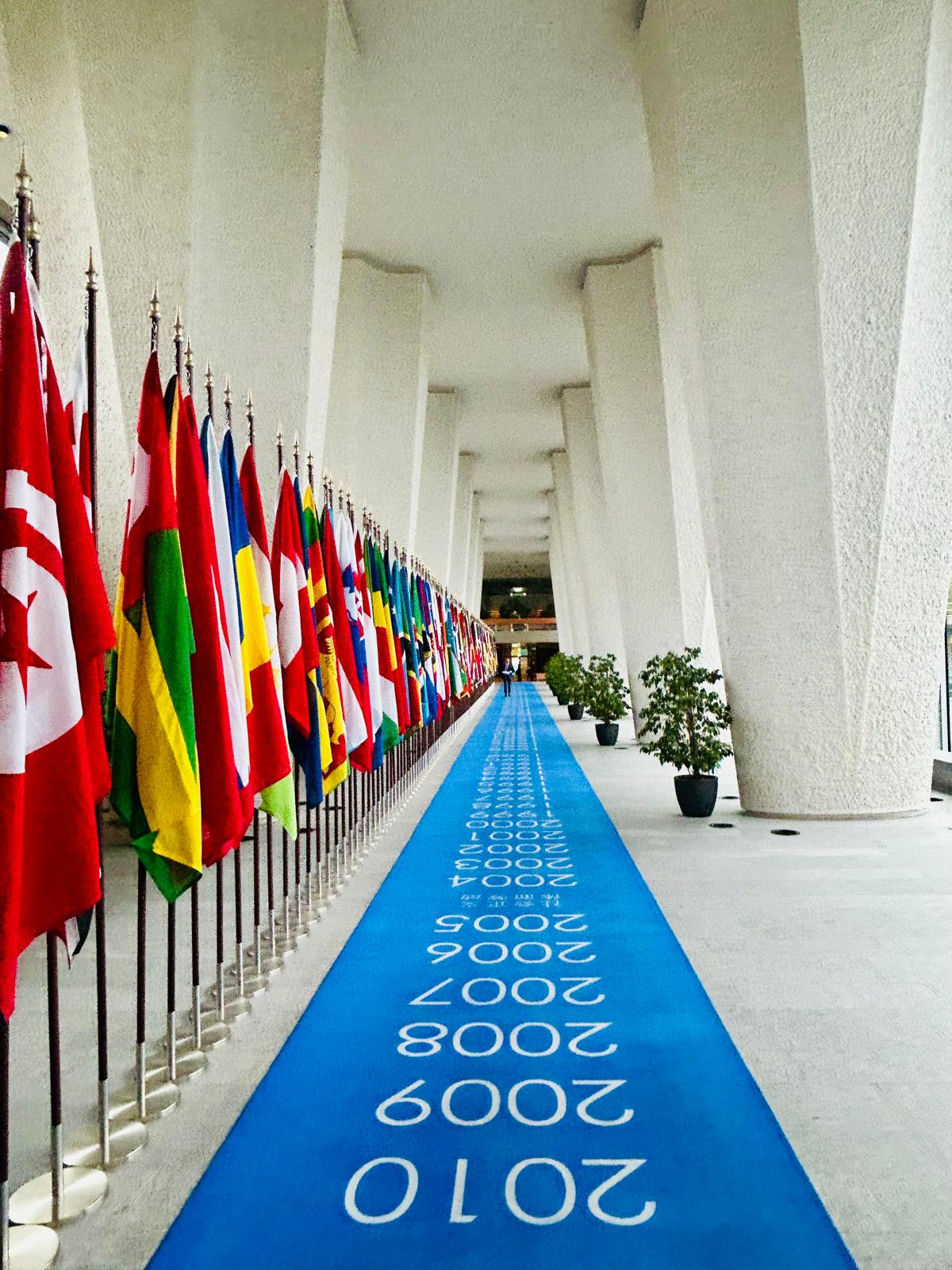
This time, we had the pleasure of hosting the conference at the headquarters of the International Labor Organization (ILO), with a record number of presentations and participants! The topics of the conference have also slightly evolved over time, moving from a narrow (albeit timely) focus on on-demand platform work to AI and its global supply chains. But the overarching goal of INDL has remained the same: to bring together interested researchers, students, workers, policymakers and activists to build innovative and actionable knowledge, in a friendly and constructive environment. It is also an increasingly international conference: this year, we have had participants from India, Sri Lanka, China, South Korea, Kenya, Nigeria, Madagascar, Morocco, Argentina, Brazil, Uruguay, Mexico, Colombia, Chile, in addition to Canada, the US, and various European countries.
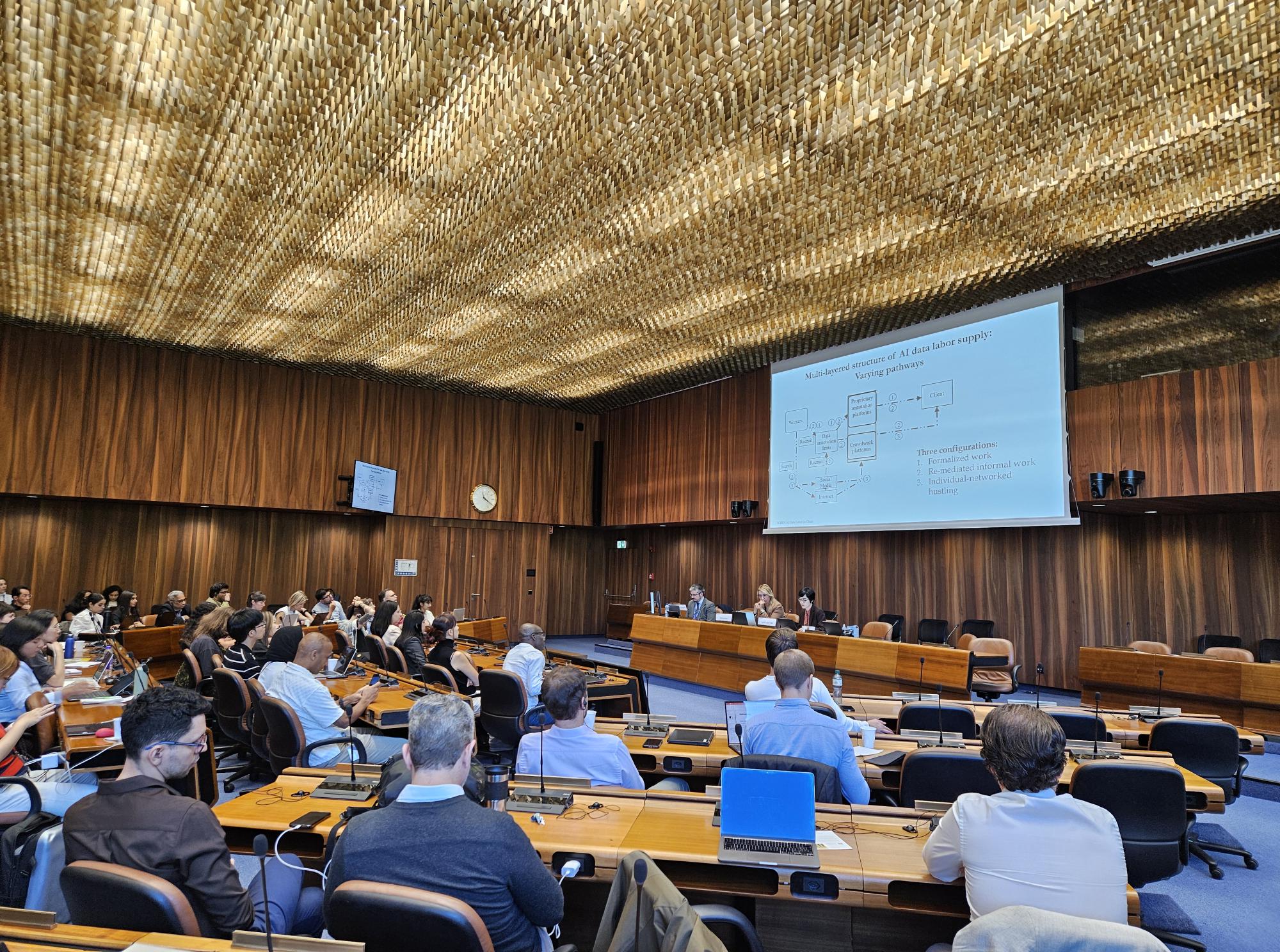
Highlights of this year have been three wonderful keynotes on the data work that fuels AI, in Venezuela (J. Posada, Yale), China (J. Chen, Univ. Toronto) and more generally throughout the world (A. Taylor, Univ. Edinburgh). I was also pleased to take part in a round table, chaired by U. Rani (ILO) on how to design new research programmes on to unpack the supply chain of AI. A particularly relevant event was a panel in which an action-research initiative to start a litigation against an outsourcing multinational, Teleperformance, was announced.
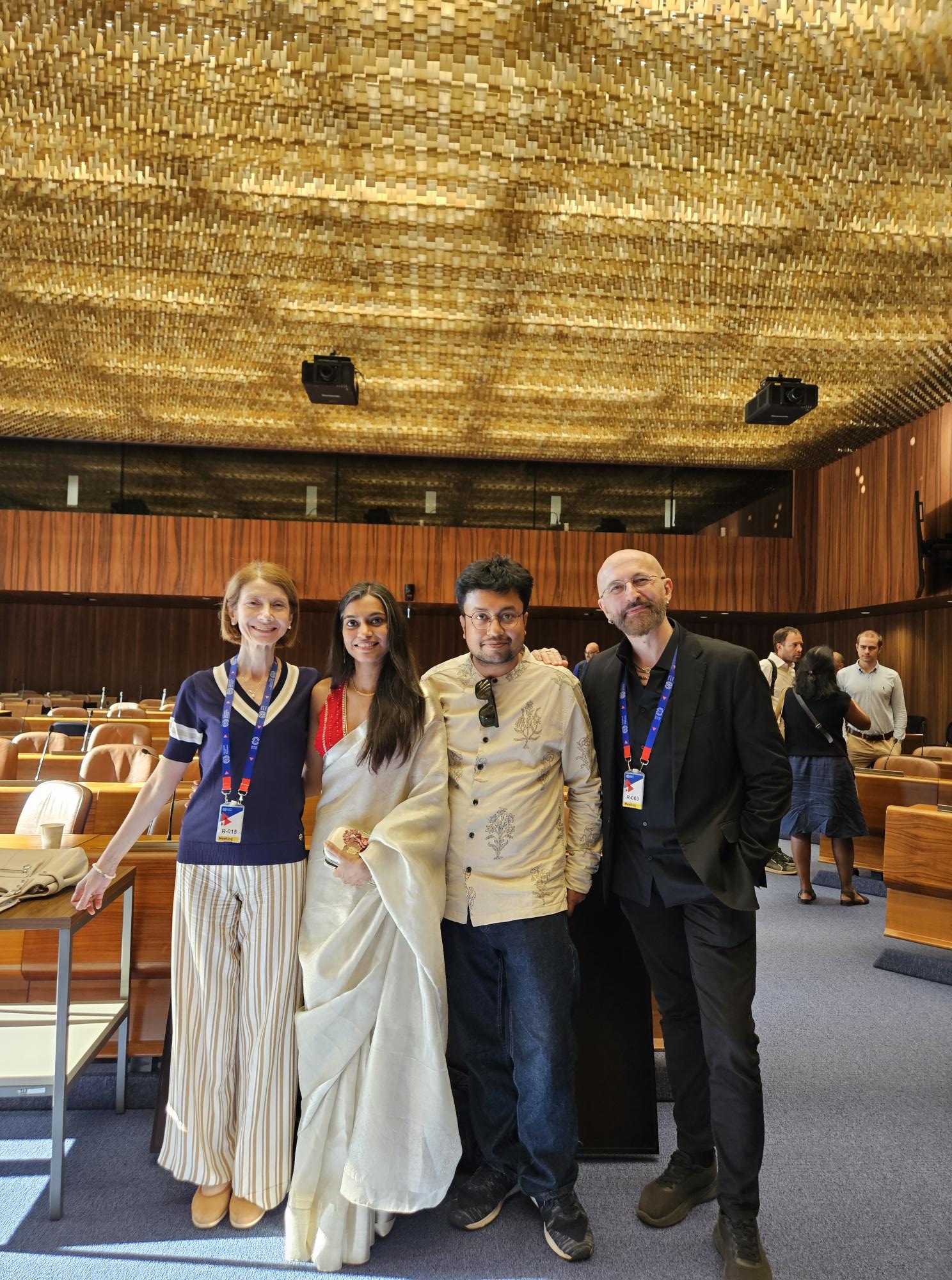
Besides that, many regular, parallel sessions have been highly interesting. The one in which I presented was on the topic of “working conditions” and stimulated a lively discussion on how to articulate multiple methods – from “big data” analyses to autoethnography, while also including more traditional statistics. Another session on “Transparency in supply chains” opened the debate to include the material infrastructure of AI, the impacts of hardware production, and the industry-levels signals that the current development of AI may resemble a bubble.
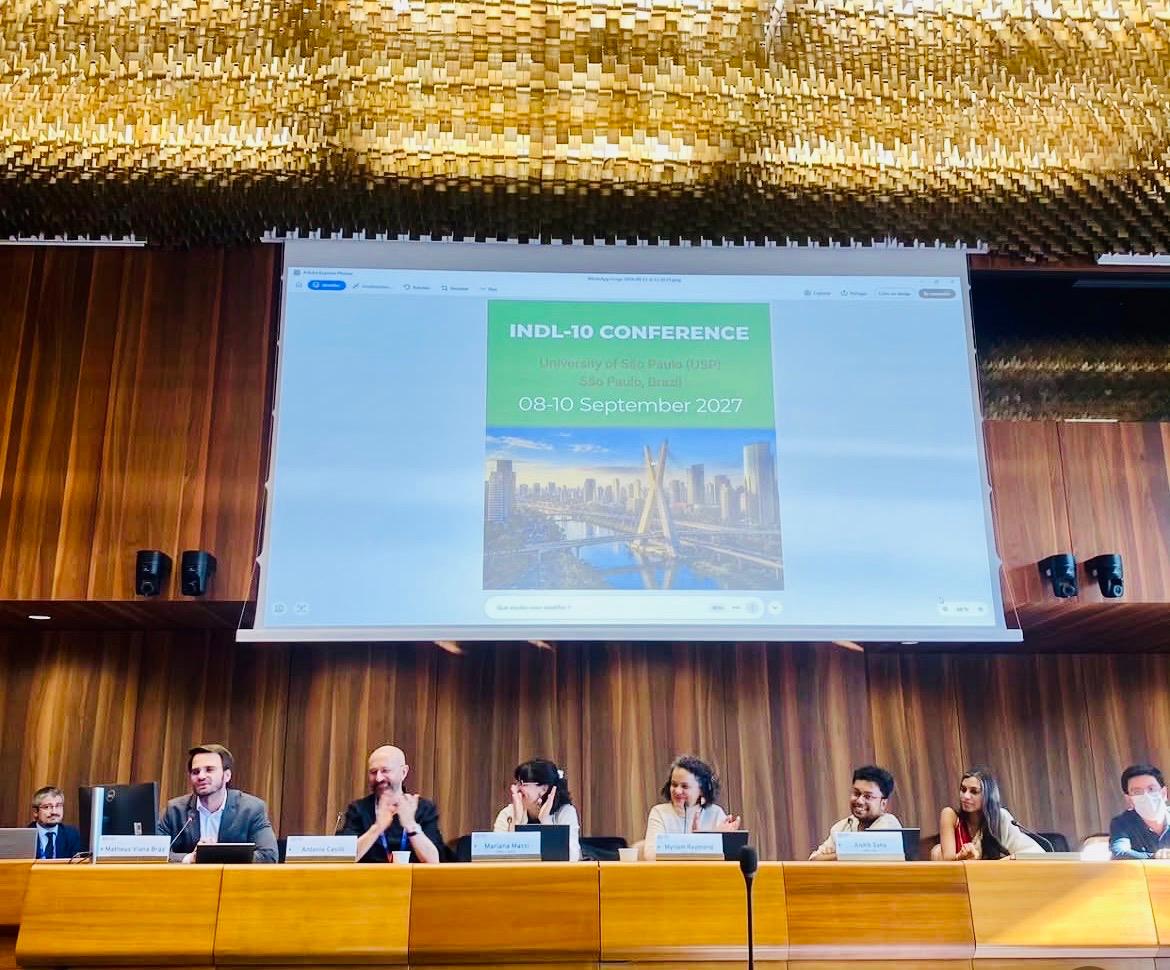
The next step is a vibrant programme of activities by the local chapters: INDL-MEA (Middle East and Africa), INDL-NA (North America), INDL-LatAm, and a new one, INDL-SA (South Asia), whose first workshop is planned in February 2027. And INDL-10 has been announced: it will take place in São Paulo, Brazil, 8-10 September 2027!

