There are two main ways in which a discipline like sociology engages with artificial intelligence (AI) and is affected by it. The sociology of AI understands technology as embedded in socio-economic systems and takes it as an object for research. Sociology with AI indicates that the discipline is also integrating AI into its methodological toolbox. Based on a talk that I gave at this year’s annual meeting of the European Academy of Sociology, I’ll give in what follows a brief overview of both. As a disclaimer, I have no pretention to be exhaustive. To narrow down the topic, I have chosen to focus on sociology specifically (rather than neighboring fields), and to rely only on already published, peer-reviewed research.

Let’s start with the sociology of AI, which I’ll illustrate with the help of the above artwork. Its aim is to demonstrate that even if there is a sense of magic in looking at the outputs of an AI system, the data on which it is based has a human origin. This work explores this idea through the symbolism of the mirror and reflection: beyond the magic, these outputs are a reflection of society. Sociological perspectives matter because they can help bring these social and human origins to the fore. In 2021, Kelly Joyce and her coauthors called for more engagement of sociologists in outlining a research agenda around these topics. Compared to other disciplines, we have a thicker understanding of the intersectional inequalities and social structures that interact with AI.
However, it was not sociology that initiated the conversation on these issues. Disciplines like computer science itself, communication, philosophy, and the arts shaped the debate. Landmark contributions were, among other things, a 2016 influential journalistic report about discrimination in predictive police applications, a 2018 computer science article on gender and race discrimination in face recognition, and an artistic project which, also in 2018, described Amazon Echo as an anatomical map of human labor, data and planetary resources. Conferences like ACM’s FaccT have become reference venues for these analyses. For clarity, some of the contributors to these debates are indeed sociologists but the discipline’s infrastructure of conferences, journals and institutions, has been less responsive.
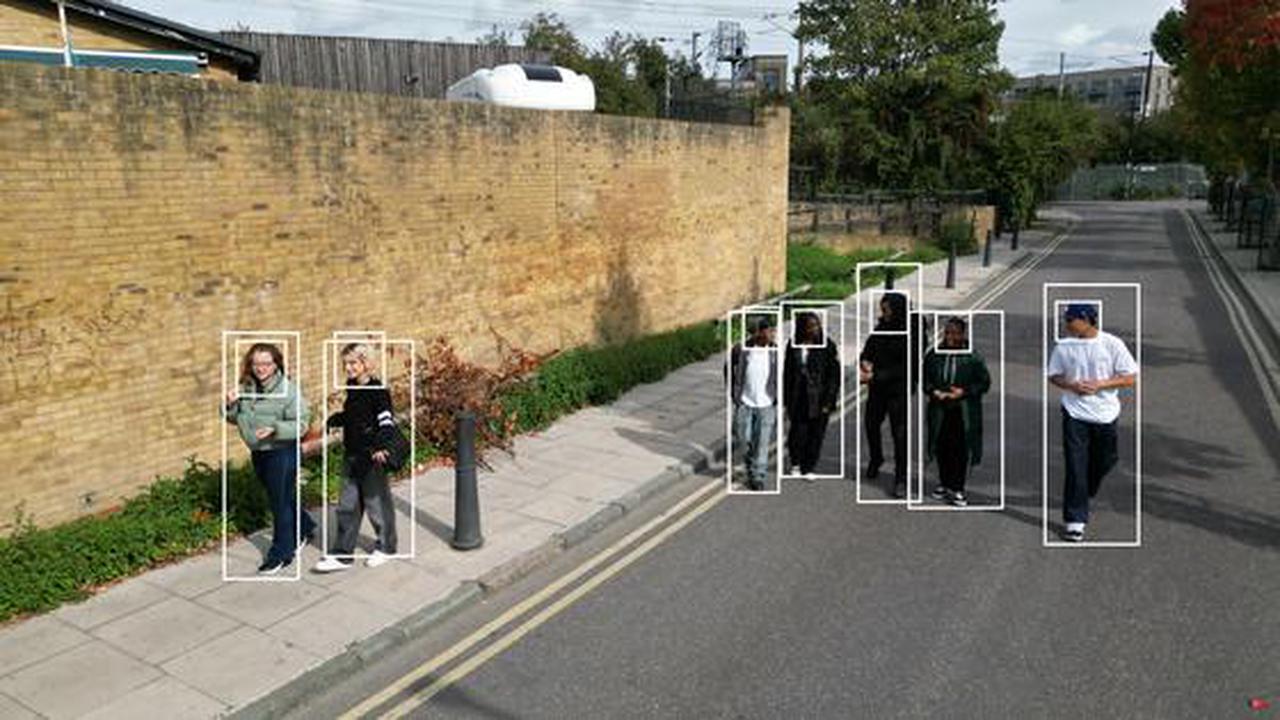
Why does the quasi-absence of sociology matter? I’ll answer this question through a 2022 paper, written by two sociologists but published in a computer science conference. The starting point is that early studies framed AI-related societal problems in terms of bias. For example, the above-mentioned report on predictive policing was entitled “machine bias”. This language points to technical corrections as remedy, but it cannot account for the social processes underway that comprise, among other things, increasing surveillance and privacy intrusion to collect more and more data (see image below). De-biasing may thus be insufficient to prevent injustice or inequality. A sociologically informed approach reveals that key questions are about power: who owns data and systems, whose worldviews are being imposed, whose biases we are trying to mitigate.
In recent years, more substantial contributions have been made within sociology. For example, there was a special issue of Socius last year on “Sociology of Artificial Intelligence”, and another one is forthcoming in Social Science Computer Review, entitled “What is Sociological About AI?”. I’ll mention a non-exhaustive selection of topics and findings. First, sociologists have recognized the hype – or how financial, political, and other interests have boosted the circulation of (often) exaggerated claims. This means shifting the gaze from AI as an intellectual endeavor, to see AI as a market – where bubbles can, well, form. This also means recognizing the political dimensions of AI development, with many states using public funding as a crucial engine for innovation.
Second, AI practitioners engage in a form of social construction of morality to legitimate their approaches to AI. For example, some distance themselves from Big Tech capitalism, some insist on the benefits of some AI applications, most prominently in healthcare. These efforts ultimately shape which technologies gain visibility and attract capital investments. This is also a way through which they produce and sustain the AI bubble itself – a culturally embedded market phenomenon. Third, sociological analysis can move beyond the technological determinism of early AI critics to emphasize the social and institutional contexts within which such algorithmic decision-making systems are deployed. This brings to light forms of negotiation, adaptation, and resistance, which have more subtle effects on inequalities.

Fourth, there is labor. Beyond fears of job losses due to AI, sociological research has unveiled a growing labor demand to produce AI itself. This does not only include the work of elite engineers and computer scientists, but also the lower-level contributions of data annotators, content moderators, voice actors, transcriptors, translators, image labelers, prompt testers, and even very basic clickworkers. This work is typically outsourced and offshored, resulting in precarious working arrangements and low pay. The above photograph represents two workers who use this job as a means of livelihoods. Overall, there is no drop in employment levels, but a steady deterioration of working conditions and an accelarated shift of the power balance from labor to capital. AI affects the very labor that produces it.
In sum, sociologists increasingly contribute to these conversations, although these topics are not prominent in the discipline’s flagship conferences and journals, and important knowledge gaps remain. The guest-editors of the forthcoming Social Science Computer Review special issue on “What is sociological about AI?” claim that “A sociological lens can render AI’s hidden processes legible, just as sociologists have done with complex and taken for granted social forces since the discipline’s inception”. They nevertheless note that “we neither have a robust concept of AI as a social phenomenon nor a holistic sociological discourse around it, despite vibrant and dynamic work in the area.” In passing, most extant studies rely on traditional methods, primarily surveys and fieldwork. This is not an issue in itself, but it highlights a disconnection with the sub-topic I’ll highlight in my next post – Sociology using AI as instrument.
 Data Big and Small