The digital labour of AI in Latin America

Another article has just been published! Another one that is based on a DiPLab-based group collaboration (with A.A. Casilli, M. Fernández Massi, J. Longo, J. Torres Cierpe and M. Viana Braz) and that uses data from multiple countries. It is entitled ‘The digital labour of artificial intelligence in Latin America: a comparison of Argentina, Brazil, and Venezuela’ and is part of a special issue of Globalizations on ‘The Political Economy of AI in Latin America’. This article lifts the veil on the precarious and low-paid data workers who, from Latin America, engage in AI preparation, verification, and impersonation, often for foreign technology producers. Focusing on three countries (Argentina, Brazil, and Venezuela), we use original mixed-method data to compare and contrast these cases in order to reveal common patterns and expose the specificities that distinguish the region.

The analysis unveils the central place of Latin America in the provision of data work. To bring costs down, AI production thrives on countries’ economic hardship and inequalities. In Venezuela and to a lesser extent Argentina, acute economic crisis fuels competition and favours the emergence of ‘elite’ (young and STEM-educated) data workers, while in more stable but very unequal Brazil, this activity is left to relatively underprivileged segments of the workforce. AI data work also redefines these inequalities insofar as, in all three countries, it blends with the historically prevalent informal economy, with workers frequently shifting between the two. There are spillovers into other sectors, with variations depending on country and context, which tie informality to inequality.


Our study has policy implications at global and local levels. Globally, it calls for more attention to the conditions of AI production, especially workers’ rights and pay. Locally, it advocates solutions for the recognition of skills and experience of data workers, in ways that may support their further professional development and trajectories, possibly also facilitating some initial forms of worker organization.


The version of record is here, while an open-access preprint is available here.

Where does AI come from?

I am thrilled to announce that an important article has just seen the light. Entitled ‘Where does AI come from? A global case study across Europe, Africa, and Latin America’, it is part of a special issue of New Political Economy on ‘Power relations in the digital economy‘. It is the result of joint work that I have done with members of the Diplab team (A.A. Casilli, M. Cornet, C. Le Ludec and J. Torres Cierpe) on the organisational and geographical forces underpinning the supply chains of artificial intelligence (AI). Where and how do AI producers recruit workers to perform data annotation and other essential, albeit lower-level supporting tasks to feed machine-learning algorithms? The literature reports a variety of organisational forms, but the reasons of these differences and the ways data work dovetails with local economies have remained for long under-researched. This article does precisely this, clarifying the structure and organisation of these supply chains, and highlighting their impacts on labour conditions and remunerations.

Framing AI as an instance of the outsourcing and offshoring trends already observed in other globalised industries, we conduct a global case study of the digitally enabled organisation of data work in France, Madagascar, and Venezuela. We show that the AI supply chains procure data work via a mix of arm’s length contracts through marketplace-like platforms, and of embedded firm-like structures that offer greater stability but less flexibility, with multiple intermediate arrangements that give different roles to platforms. Each solution suits specific types and purposes of data work in AI preparation, verification, and impersonation. While all forms reproduce well-known patterns of exclusion that harm externalised workers especially in the Global South, disadvantage manifests unevenly depending on the structure of the supply chains, with repercussions on remunerations, job security, and working conditions.

Marketplace- and firm-like platforms in the supply chains for data work in Europe, Africa, and Latin America. Dark grey countries: main case studies, light grey countries: comparison cases. Organisational modes range from almost totally marketplace oriented (darker rectangle, Venezuela) to almost entirely firm oriented (lighter rectangle, Madagascar). AI preparation (darker circle) is ubiquitous, but AI verification (darker triangle) and AI impersonation (darker star) tend to happen in ‘deep labour’ and firm-like organisations where embeddedness is higher.

We conclude that responses based only on worker reclassification, as attempted in some countries especially in the Global North, are insufficient. Rather, we advocate a policy mix at both national and supra-national levels, also including appropriate regulation of technology and innovation, and promotion of suitable strategies for economic development.

The Version of record is here, while here is an open access preprint.

Meet the human workers behind AI

Last week with the Diplab team, we spent two exciting days at the European Parliament in Brussels, engaging in profound discussions with and about platform workers as part of the 4th edition of the Transnational Forum on Alternatives to Uberization.

Our stellar panel, co-organized with A. Casilli, M. Miceli, T. Le Bonniec and others, featured data workers and commercial content moderators Kauna Ibrahim Malgwi, Noraly Guevara and Sakine B., as well as researcher Jonas CL Valente from the Fairwork initiative.

Together, we delved into the intricacies of the human labor that fuels artificial intelligence and ensures safe participation to social media. Together, we discussed workers’ expectations, concerns and common struggles to move forward toward a world in which where technology serves all humans equally and responsibly.

1st INDL-Middle East and Africa conference

I am proud to announce that our group International Network on Digital Labor (INDL), together with the Access to Knowledge for Development Center (A2K4D) at The American University in Cairo’s School of Business, is organising the inaugural conference of the Middle East and Africa (MEA) chapter of INDL titled ‘Digital Labor Perspectives from the Middle East and Africa.’ Organized in collaboration with the International Labour Organization (ILO), Digital Platform Labor (DiPLab), Weizenbaum Institute and Université française d’Egypte, this conference will be held on May 28, 2024, in Cairo, Egypt.

Rationale

Digital labor is at the heart of our evolving economies. To address the specific challenges and developments in the Middle East and Africa (MEA), we are launching a dedicated chapter of INDL for the region.

This conference provides a unique platform to present research related to the MEA region, both ongoing and/or burgeoning. The conference offers opportunities for scholars and practitioners to engage with topics such as platformization, automation, gig economy dynamics, and technology-mediated labor.

INDL-MEA will feature three tracks: one in Arabic, one in English, and one in French, reflecting the linguistic diversity of the region.

Topics

Submissions must be in reference to the MEA region, for instance: in perspective, case studies, or focus.

Submission topics may include but are not limited to

  • Case studies examining platforms, gig economy workers, and online digital labor in MEA
  • Exploring algorithmic management practices in work processes, recruiting, and HR in MEA
  • Issues of digital platform labor on gender and inclusion in the MEA region
  • Consequences of the shift to digital labor on workers, businesses, economies, and labor markets in MEA
  • Effects of remote work and digital labor on employee well-being and productivity in MEA
  • Policy responses to the rise of digital labor and automation in MEA, including regulatory measures and government intervention
  • Strategies for organizing digital workers and managing geographically distributed workforces in MEA
  • Intersectional perspectives on digital labor in MEA
  • Exploring AI and digital labor through a decolonial lens in MEA
  • Challenges posed by Generative AI to human labor in MEA

Submissions

We invite submissions of anonymized abstracts for papers, case studies, and policy briefs related to these topics. Abstracts, up to 500 words, can be submitted in Arabic, English, or French through our website INDL-MEA.

Important Dates

  • Deadline for submissions: January 31, 2024
  • Acceptance notification: February 15, 2024
  • Registration opens: TBA
  • INDL-MEA conference date: May 28, 2024

Together, let’s foster a thought-provoking dialogue and contribute to shaping the future of digital labor in the Middle East and Africa.

For more information, please see the INDL website.

To submit an abstract, click here.

Micro-work and the outsourcing industry in Madagascar

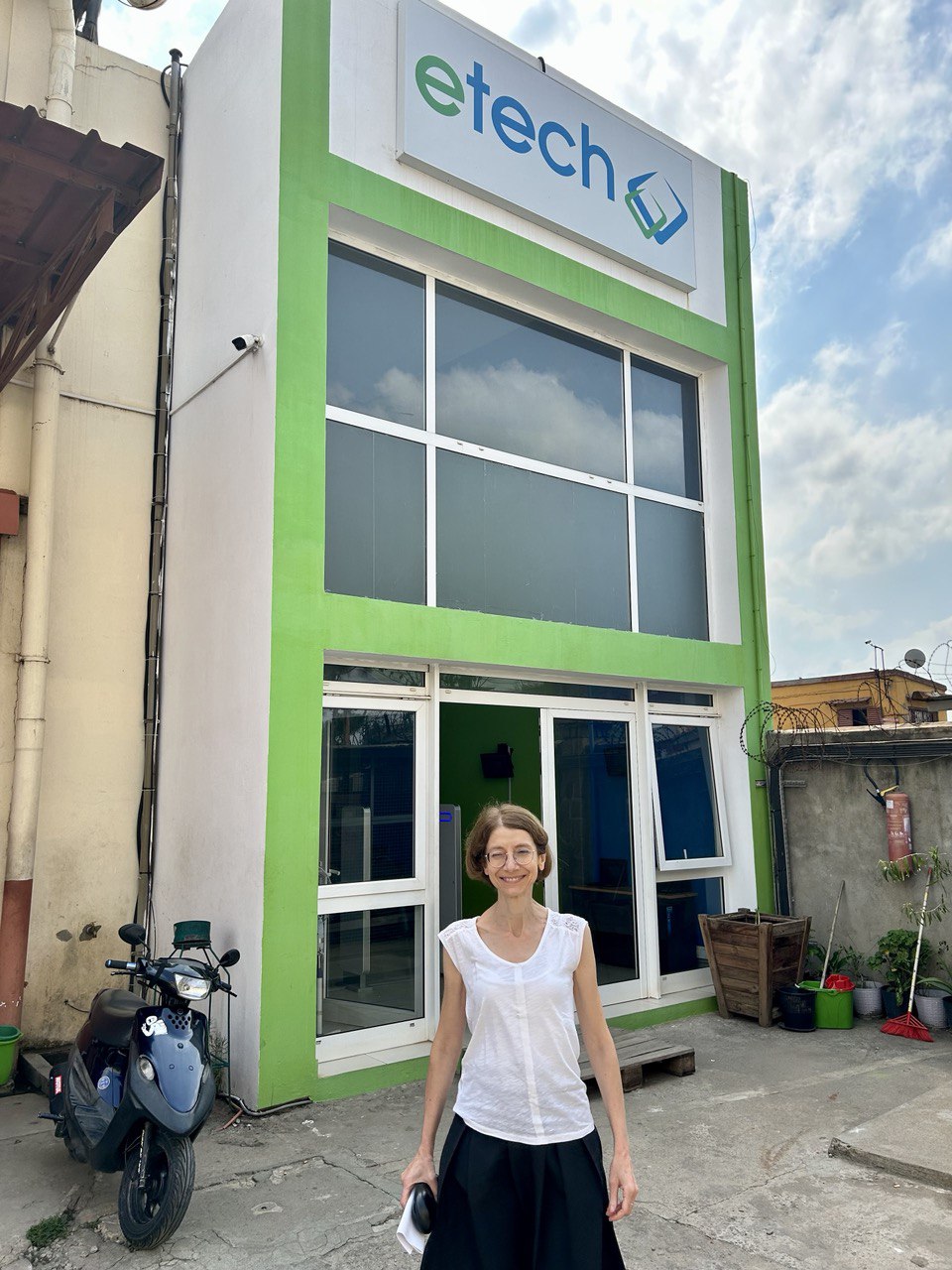
I had the privilege and pleasure to visit Madagascar in the last two weeks. I had an invitation from Institut Français where I participated in a very interesting panel on “How can Madagascar help us rethink artificial intelligence more ethically?”, with Antonio A. Casilli, Jeremy Ranjatoelina et Manovosoa Rakotovao. I also conducted exploratory fieldwork by visiting a sample of technology companies, as well as journalists and associations interested in the topic.

A former French colony, Madagascar participates in the global trend toward outsourcing / offshoring which has shaped the world economy in the past two decades. The country harnesses its cultural and linguistic heritage (about one quarter of the population still speak French, often as a second language) to develop services for clients mostly based in France. In particular, it is a net exporter of computing services – still a small-sized sector, but with growing economic value.

Last year, a team of colleagues has already conducted extensive research with Madagascan companies that provide micro-work and data annotation services for French producers of artificial intelligence (and of other digital services). Some interesting results of their research are available here. This time, we are trying to take a broader look at the sector and include a wider variety of computing services, also trying to trace higher-value-added activities (like computer programming, website design, and even AI development).

It is too early to present any results, but the big question so far is the sustainability of this model and the extent to which it can push Madagascar higher up in the global technology value chain. Annotation and other lower-level services create much-needed jobs in a sluggish economy with widespread poverty and a lot of informality; however, these jobs attract low recognition and comparatively low pay, and have failed so far to offer bridges toward more stable or rewarding career paths. More qualified computing jobs are better paid and protected, but turnover is high and (national and international) competition is tough.

At policy level, more attention should be brought to the quality of these jobs and their longer-term stability, while client tech companies in France and other Global North countries should take more responsibility over working conditions throughout their international supply chains.

Brazil in the global AI supply chains: the role of micro-workers

AI is not just a Silicon Valley dream. It relies among other things, on inputs from human workers who generate and annotate data for machine learning. They record their voice to augment speech datasets, transcribe receipts to provide examples to OCR software, tag objects in photographs to train computer vision algorithms, and so on. They also check algorithmic outputs, for example, by noting whether the outputs of a search engine meet users’ queries. Occasionally, they take the place of failing automation, for example when content moderation software is not subtle enough to distinguish whether some image or video is appropriate. AI producers outsource these so-called “micro-tasks” via international digital labor platforms, who often recruit workers in Global-South countries, where labor costs are lower. Pay is by piecework, without any no long-term commitment and without any social-security scheme or labor protection.

In a just-published report co-authored with Matheus Viana Braz and Antonio A. Casilli, as part of the research program DiPlab, we lifted the curtain on micro-workers in Brazil, a country with a huge, growing, and yet largely unexplored reservoir of AI workers.

We found among other things that:

  • Three out of five Brazilian data workers are women, while in most other previously-surveyed countries, women are a minority (one in three or less in ILO data).
  • 9 reais (1.73 euros) per hour is the average amount earned on platforms.
  • There are at least 54 micro-working platforms operating in Brazil.
  • One third of Brazilian micro-workers have no other source of income, and depend on microworking platforms for subsistence.
  • Two out of five Brazilian data workers are (apart from this activity) unemployed, without professional activity, or in informality. In Brazil, platform microwork arises out of widespread unemployment and informalization of work.
  • Three out of five of data workers have completed undergraduate education, although they mostly do repetitive and unchallenging online data tasks, suggesting some form of skill mismatch.
  • The worst microtasks involve moderation of violent and pornographic contents on social media, as well as data training in tasks that workers may find uncomfortable or weird, such as taking pictures of dog poop in domestic environments to train data for “vacuuming robots”.
  • Workers’ main grievances are linked to uncertainty, lack of transparency, job insecurity, fatigue and lack of social interaction on platforms.

To read the report in English, click here.

To read the report in Portuguese, click here.

INDL-6 Conference: CfP now open

We are excited to announce the 6th Conference of the International
Network on Digital Labor (INDL-6), scheduled to take place 9-11 October, 2023. The conference aims to bring together experts from various
fields to discuss the latest research findings and share ideas on the
topic of Digital Labor in the Wake of Pandemic Times. Following
long-term technological trends as well as exogenous shocks, the field of
digital labor is constantly expanding. This year’s INDL conference will
be an excellent opportunity to exchange insights and perspectives, as
well as a great way to make new friends among researchers, workers,
policymakers, and practitioners who study the future of work, social
justice, platforms, and artificial intelligence (AI).

The INDL-6 conference will be held in-person at the Weizenbaum Institute
for the Networked Society in Berlin, Germany. It is co-organized by the
International Labor Organization (ILO), the Digital Platform Labor (DiPLab) group, and Wissenschaftszentrum Berlin für Sozialforschung (WZB).

We encourage all interested researchers, post-graduate students, and practitioners to submit proposals that address aspects of digital labor, including but not limited to: gig economy, online labor, workplace surveillance, algorithmic management, AI-assisted recruiting, remote work, employee well-being, inequality, policy responses to Covid-19 crisis, regulation, organizing digital workers, gender and work, LGBTQ+ workers, intersectionality, disability, inclusion, AI, decolonial lens, informal labor markets, generative AI and work.

We welcome submissions that are interdisciplinary in nature and strongly
encourage proposals by researchers and practitioners from the Global
South across all topics.

The Call for Papers is available here and the deadline is 12 April.