After having studied the impacts of AI on labour and society for years, I am now joining forces with colleagues interested in the materiality of AI and its appetite for natural resources – energy, water, and land. As part of the collaborative project SEED, with the DiPLab and FAIR teams, I spent almost a month doing fieldwork in Chile to dig deeper into the matter.
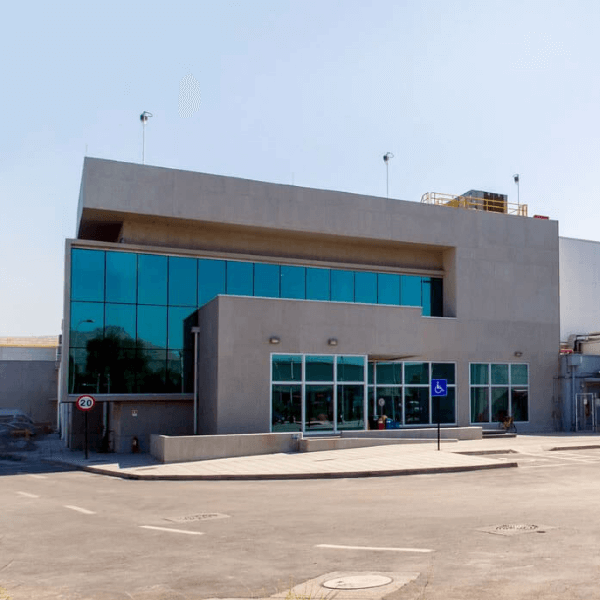
Google’s data center in Quilicura, Chile.
Chile is an especially interesting case study. In the global industry of AI, it is a peripherical country; but it is a rich country, highly digitized and with the best connectivity in the world, where use of AI tools is already widespread. It is not a leader, but it is a hub that provides resources. In Chile, all the phases of the supply chain of AI can be observed, starting from the mines of rare earths in Penco, and of copper and lithium in the Atacama Desert, to the data centers that populate (especially, though not only) the Quilicura area, the submarine cables that connect Valparaiso to the world through the Pacific, and the research labs in Santiago. Chile is also emblematic of the frictions that may arise as a result, and of the potential societal reactions – the most telling example being the quili.ai initiative to raise worldwide awareness about the consumption of water by data centers and the ensuing risks for the population. Yet, not all the potentially concerned actors have sufficient capacity to anticipate these impacts, especially outside the capital.
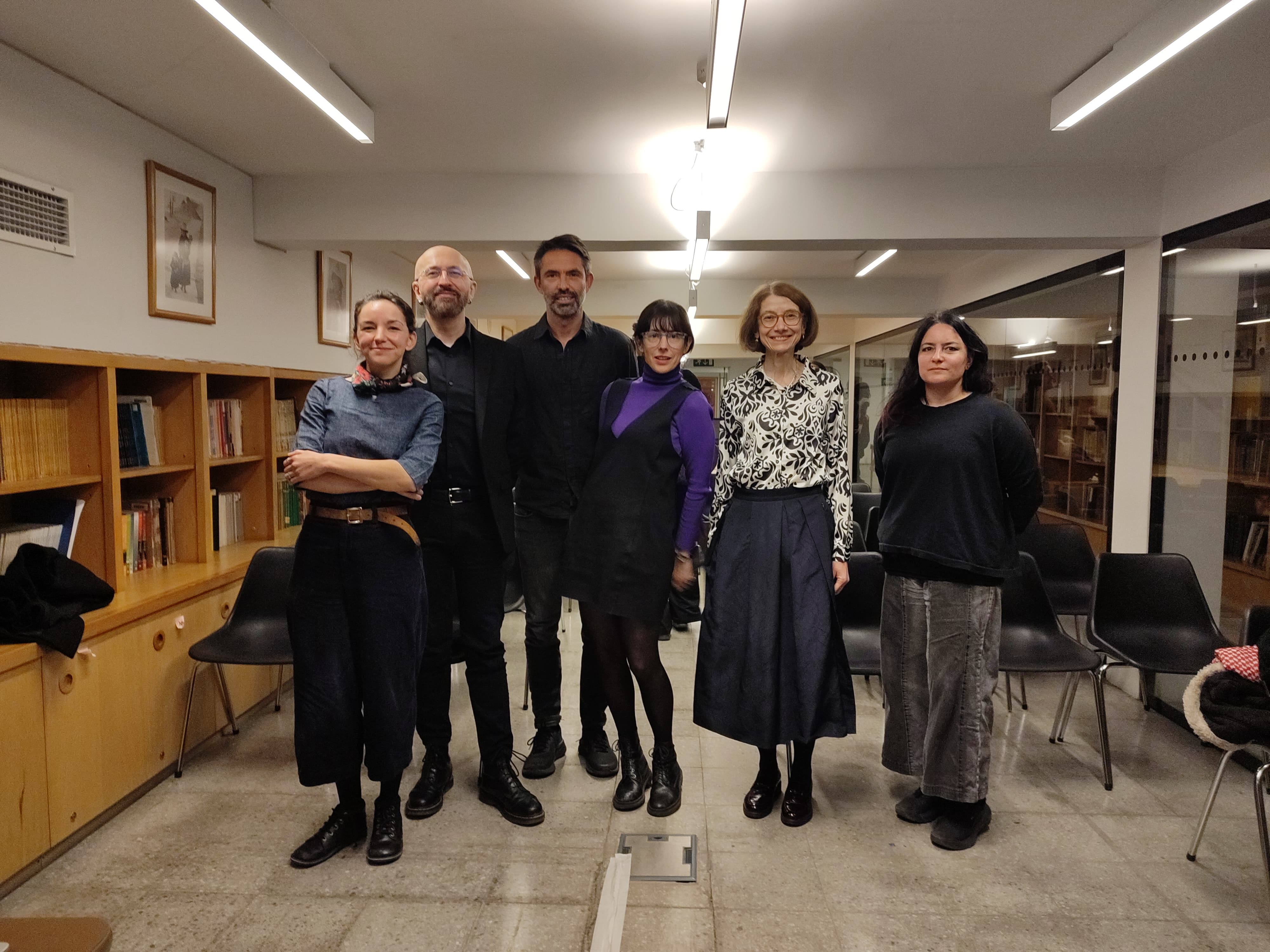
After an interdisciplinary panel at the intersection of AI, mineral extraction, ecology, and planetary habitability at Museo Chileno de Arte Precolombino, Santiago, 2 July 2026.
During almost a month, I could address these issues very productively with fellow researchers, policymakers, environmental judges, activists, and artists. The result is a rich baggage of information, and an extremely helpful basis for further research and action.
I am delighted to be part of a broad reflection, initiated and promoted by Edemilson Paraná, that critically interrogates the convergence of environmental sustainability and digitalization, in a special issue just published in the journal Globalizations. Governments and multi-lateral institutions frame the “twin transition” as a strategy to foster economic growth and durable social prosperity at the same time. However, Paraná argues in his introductory article (co-authored with Rodrigo Santaella-Gonçalves), this agenda is shaped by market logics and geopolitical competition, in ways that ultimately contradict the social and ecological goals it supposedly supports. The special issue has been designed to offer a systemic political-economy perspective on this inconsistency, grounded in critical social sciences and heterodox economics. Overall, it shows how the structural drivers of digitalisation can constrain its green potential and identifies pathways for redirecting the transition towards socially equitable and ecologically sustainable transformations.
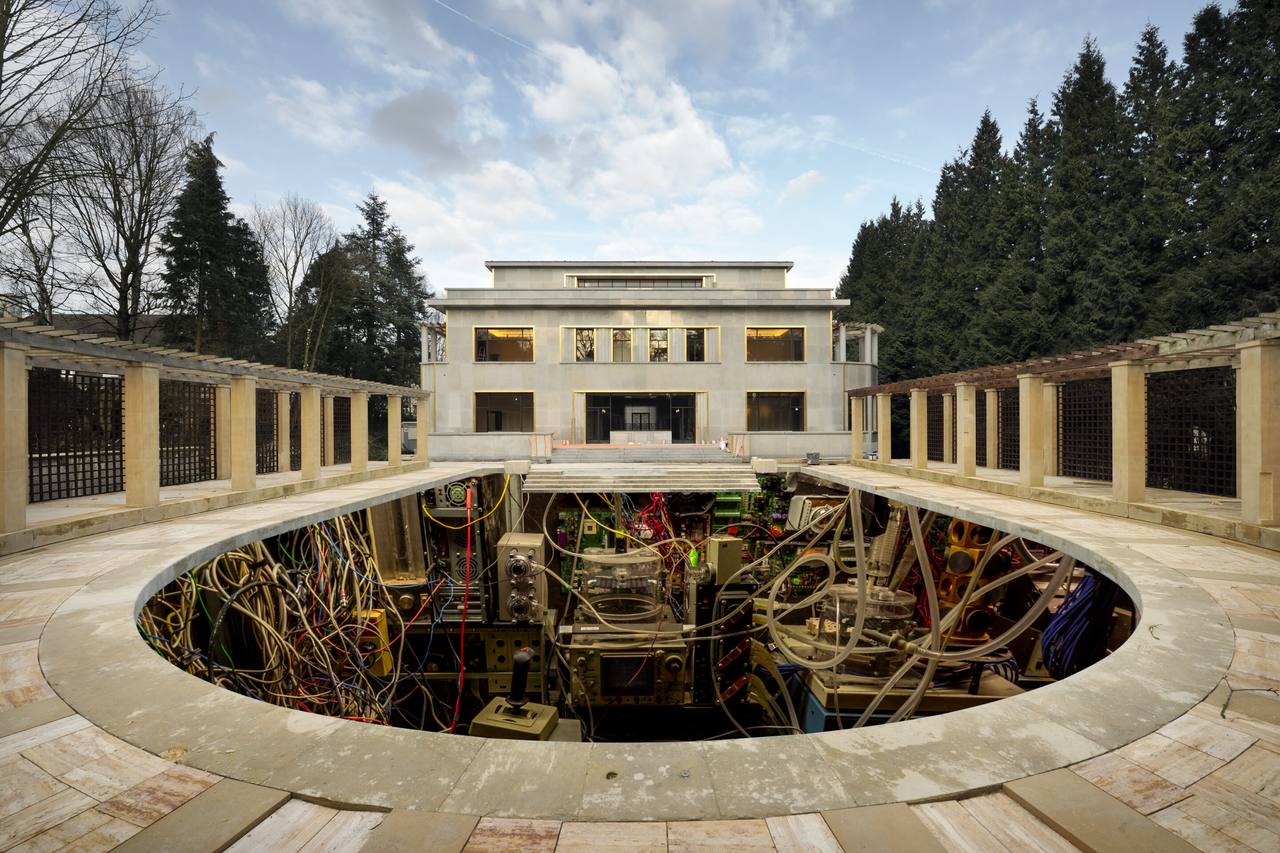
Ulysse Gerkens & FARI / “Server Pool” / https://betterimagesofai.org / https://creativecommons.org/licenses/by/4.0/ This image subverts the swimming pool of the Villa Empain, a Brussels contemporary art venue. The pool is drained of its water and filled with computer servers. The image makes visible the massive water consumption required to cool data centers, but also questions the allocation of resources: when enormous budgets shift toward digital infrastructure, what remains for culture?
My own article within this special issue aims to reconcile two separate trends in the study of the impacts of artificial intelligence (AI), one focused on the natural and the other on the social surroundings that supply resources for its production and use. I introduce the concept of the ‘dual footprint’ as a heuristic device to capture the commonalities and interdependencies between them. Originally borrowed from ecology, the concept denotes here the total impacts on the environment and society generated by AI’s production and use. It is an indicator of sustainability insofar as it grasps the degree to which the AI industry is failing to ensure the maintenance of the socio-economic systems and environmental conditions necessary to its production. To develop the concept in this way, it is necessary to (provisionally) renounce some of the accounting flavour of extant footprint measures, allowing for a more descriptive interpretation. In my article, the dual footprint serves as a mapping tool, linking impacts to specific locations and to the people and groups that inhabit them.
I use two in-depth case studies, each illustrating international flows of raw materials (nature) and of labour services (society). Case studies are a preliminary illustration of a broader idea, that will need to be developed further: that the AI industry is a value chain that spans national boundaries and perpetuates inherited global inequalities. Specifically, I use the case of Argentina as a provider to the United States and Madagascar as a provider to France, Japan and South Korea. It appears that the countries that drive AI development (here, the United States, France, Japan and South Korea) generate a massive demand for inputs and trigger social costs that, through the value chain, largely fall on more peripheral actors (here, Argentina and Madagascar). While Argentina and Madagascar differ under many respects, in both cases initial hopes of jobs and prosperity have failed to materialise as predominant outsourcing arrangements reinforce informality and precariousness without preventing environmental damage. Put differently, the arrangements in place distribute the costs and benefits of AI unequally, resulting in unsustainable practices and preventing the upward mobility of relatively more disadvantaged countries. The concept of the dual footprint is useful because it grasps how the environmental and social dimensions of the dual footprint emanate from similar underlying socio-economic processes and geographical trajectories.
A prior presentation of this idea can be found here.
A pre-print version of the article (green open access) can be found here.
 Data Big and Small