In my presentation, I challenged common narratives of automation by revealing how, behind the “magic” of contemporary AI, lies intensive human labour. This includes the often-invisible work of data annotators, content moderators, translators, voice actors, and numerous other contributors who make AI systems function. OSH issues in AI production arise directly from the organization of this work. The combination of outsourcing, offshoring, and digital intermediation creates precarious labor conditions that significantly affect workers’ mental health and well-being. I highlighted three critical dimensions of occupational health risks:
Stress from uncertainty and long/unusual working hours: Data workers face unstable employment conditions, irregular schedules, and the constant pressure of uncertain income streams.
Social isolation: The digitally mediated nature of this work, often performed remotely and with little direct human contact, contributes to profound feelings of isolation among workers.
Post-Traumatic Stress Disorder (PTSD): Content moderation workers, in particular, face severe psychological consequences from repeated exposure to disturbing, violent, or traumatic content.
The ETUI annual conference on Occupational Safety and Health brought together researchers, trade union representatives, policymakers, and practitioners to examine the challenges and opportunities that artificial intelligence presents for workplace safety and health across Europe.
We know this now: artificial intelligence is not only a Silicon Valley product. When trying to look further, research and the media have found AI’s “hidden workforce” (the data workers who label images, transcribe audio, and evaluate content to train machine learning models) in countries like Kenya, the Philippines, Venezuela, and Madagascar.
In a new study, led by Myriam Raymond and with the collaboration of Antonio A. Casilli and Lucy Neveux, we lift the veil on data work in Egypt. Over 600 questionnaires, 15 focus groups, and an online ethnography reveal the substantial contribution of this country to AI technologies produced and marketed overseas. Egypt’s position in the global AI supply chain is unique, as it serves technology companies both in the Western world (Europe and North America) and in China, often through intermediaries based in the Gulf.
As already observed in other countries, these workers are mostly young: three quarters are below 34 years of age. They live mostly in urban areas. They are also highly educated: in particular, three out of five have an undergraduate degree in science or technical fields. Another notable similarity concerns low pay and lack of protections. We find that four out of five data workers undertake this activity out of financial need, and they spend the income earned in this way immediately on rent, food, and clothes. On average, though, data work pays less than half the country’s monthly minimum wage, and earnings are highly volatile.
The gender gap is more acute than observed elsewhere. Three workers out of four are men. The few female data workers are more dependent on this activity: data work is the only job for two out of ten of them (against one in ten men). Women face unique barriers, reflecting locally-grounded cultural constraints and concerns about online safety.
More generally, culture and morals play an important role in the perceptions that Egyptian workers have of their activity – in ways that had not emerged so forcefully in other countries before. Data tasks sometimes conflict with their principles and beliefs, prompting them to continually question and, at times, reshape their digital identities.
The work that fuels AI – from data labelling to content moderation, output checking, red teaming, and so on – is typically outsourced. Digital platforms that operate as online marketplaces play a pivotal role in making this possible. They extend outsourcing to individuals, removing the informational bottlenecks that previously limited it to (multi-person) firms. Platforms treat workers as independent contractors and do not guarantee labour rights. Job insecurity, income volatility, wage theft, and in some cases mental health issues, are common. However, cases of worker mobilisation remain rare. Why, and how can this be changed?
Barriers
A specific challenge that arises on platforms is the asymmetric distribution of work, with a relatively small number of users doing most tasks, and a long tail of minimally-active (or even inactive) people. The reason is that registration is (more or less) open but demand is variable, so that a worker must beat the competition to find tasks to do. This has two main implications. One is that from start, there is an incentive to see other workers as competitors rather than colleagues. The other is that it is difficult to motivate people in the long tail to take action: they are more likely to exit than to voice their grievances.
Lack of a shared worker identity is another crucial gap. Data work was initially portrayed as simple and straightforward, and even sometimes considered as a form of consumption or leisure. Many platforms carefully avoid even using the word ‘worker’, instead preferring terms like ‘Turkers’ (Amazon Mechanical Turk) or ‘Tolokers’ (Toloka). The very fact that workers themselves often take the rhetoric of simple tasks at face value, and struggle to see themselves as such, is indicative of their experience of disrespect, due to widespread misrecognition.
Juliet Schor writes that “platform earners are not only independent in a legal sense; they also typically do their work independently of other workers”. Technology enables extreme fragmentation of labour and rules out teamwork. Neither do workers ever meet their clients (technology producers), due to platform intermediation. In sum, platform data work isolates workers both from their peers and from other stakeholders (as the above picture cleverly represents). How to organise if you are alone?
Alternatives
In this context, it is useful to broaden our understanding of worker organisation. Beyond collective acts undertaken within an institutionalised framework, we should also embrace informal, unorganised and subtle actions, which can nevertheless lead to positive outcomes.
In crisis-stricken Venezuela, very large numbers of people started data work on online platforms to earn much-needed hard currency. Here, workers have leveraged their personal networks of family and friends to surmount the multiple obstacles posed by platform work. They never created any official organisation, and their actions would rarely qualify as forms of resistance. Some were mere attempts to limit losses in a harshly competitive environment. As researchers, we need to be mindful of cases in which, owing to an unfavourable context, workers prioritise the (short-run) need to counter local scarcity through online earnings, rather than any (longer-run) fight against unfavourable platform management. (More on this case here.)
Ways forward
There are nevertheless signs that successful strategies exist. Kenya is a rare example of organisation: data workers and content moderators in this country initiated actions that attracted international attention and, as in a virtuous circle, support. Of course, not all is easy for them, but Kenya is now a reference, an example for everyone else. This suggests that it is essential to give visibility to workers’ conditions and to any action they undertake to defend their rights.
The other lesson learned from the Kenyan case is that collaborations between multiple stakeholders can achieve a lot in supporting workers and triggering change. Not only established unions, but also researchers, policymakers, and activists in various NGOs (for example, engaged for personal data protection, against discrimination, etc.) can act as multipliers of the resources available to workers.
And yet, Venezuela has massively supplied cheap data work to US-based technology producers throughout all these years. Through digital labour platforms, an educated but impoverished workforce made its way to (the bottom of) the supply chains of US-directed artificial intelligence (AI).
Since about 2017, high inflation, increasing scarcity of even basic goods, and widespread poverty have pushed Venezuelans to work for international platforms that pay in US dollars, albeit at low rates. They have come to constitute a large reservoir for technology producers, mainly (though not only) in the United States. Known for their willingness to accept even the lowest pay rates in the data work market, Venezuelan workers have annotated hundreds of thousands of videos and images for the development of (for example) self-driving vehicles. Ironically, the very policies of Chavist governments – from Chávez himself to Maduro – made this possible. Cheap access to electricity and promotion of digital literacy, including through the widespread distribution of locally produced computers (‘Canaima’) to students and schoolchildren, provided people with the necessary infrastructure to perform data work. Even outdated and malfunctioning, these equipments played a crucial role in enabling widespread Venezuelan participation to the AI pipeline.
Nicolas Gourault (2020). VO: A documentary and sensory investigation about the role of human workers in the training of driverless cars. Source: https://nicolasgourault.fr/films/vo
For Venezuelan workers, platforms labour has constituted a a resilience strategy against adverse local conditions. Participation has never been easy owing to frequent power cuts, slow internet connection, and aging devices, not to mention the difficulty of working almost entirely in English. The high educational levels and computing skills of many workers (including experienced professionals and science/technology students), and embeddedness in densely knit networks of support offered solutions. At the same time, work on platforms is not without challenges, and all Venezuelan data workers have experienced some form of disrespect. Being paid less than peers in neighbouring countries, or even being offered fewer tasks than these foreign peers, are examples of this. At some point, they had to endure a widespread perception that they do not work well. Resisting against international platforms can be more challenging than bypassing local restrictions, and Venezuelan workers limited themselves to occasional acts of minor cheating involving only very few of them.
Venezuelans’ resolve to move out of the crisis and the networked relationships that sustain each of them against hardship have made them massively present, as ‘uninvited protagonists,’ in international data work platforms. Conversely, some AI companies and platforms (from the Global North in general, and from the United States specifically) targeted Venezuela deliberately, not much for the qualities and skills of its highly educated population, but for its low cost at a time of crisis. These platform-mediated encounters enabled short-term solutions, but haven’t raised Venezuela out of poverty, and haven’t ensured a durable provision of high-quality data for AI.
What comes next inside Venezuela is deeply unclear, but unfortunately, nothing (for now) suggests any recognition of the role of these workers in the technology industry, or any opportunity to reshape its outputs in more equitable and respectful ways.
There are two main ways in which a discipline like sociology engages with artificial intelligence (AI) and is affected by it. In a previous post, I discussed how the sociology of AI understands technology as embedded in socio-economic systems and takes it as an object for research. Here, focus is on sociology with AI, indicating that the discipline is integrating AI into its methodological toolbox.
AI technologies were designed for other-than-research purposes, but they may be repurposed. The editors of a special issue of Sociologica last year stress that, ten years ago, digital methods presented similar challenges: for example, using tweets to make claims about the social world required us to understand how people used Twitter in the first place. We also needed to understand which people used Twitter at all, and what spaces of action the architecture and Terms of Use of this platform allowed. Likewise, using AI technologies can serve sociologists insofar as efforts are made to understand the technological (and socio-economic) conditions that produced them. Because AI systems are typically blackboxed, this requires, to begin with, developing exploration techniques to navigate them. For example, the plot below is from a recent paper that asked five different LLMs to generate religious sermons and compared the results (readability scores) by religious traditions and race. It finds that Jewish and Muslim synthetic sermons were constructed with significantly more difficult reading levels than were those for evangelical Protestants, and that Asian religious leaders were assigned more difficult texts than other groups. It is a way to uncover how models treat religious and racial groups differently, although it remains difficult to detect precisely which factors affect this result.
Robust regression coefficients predicting readability scores by religion, race, and model. Source: Tom J.C., Ferguson T.W. & Martinez B.C. 2025. Religion and racial bias in Artificial Intelligence Large Language Models. Socius: Sociological Research for a Dynamic World, 11. https://doi.org/10.1177/23780231251377210
That said, how can AI help us methodologically? To answer this question, it is useful to look at qualitative and quantitative approaches separately. Qualitative research, traditionally viewed and practiced as an intensely human-centred method, may seem at first sight incompatible with it. However, use of computer-assisted qualitative data analysis (with tools such as Nvivo) is now common among qualitative researchers, though it faced some degree of scepticism at the beginning. Attempts to leverage AI move forward this agenda, and the most common application so far is automated transcription of interviews through speech recognition technologies. AI-powered tools make this otherwise tedious task more efficient and scalable. A recent special issue of the International Journal of Qualitative Methods maps a variety of other usages, less common and more experimental: for example, considering that even the best models for audio transcription are not as accurate as humans, LLMs appear as tools to facilitate and speed up transcription cleaning. There are also some attempts at using LLMs as instruments for coding and thematic analysis: for example, some authors have examined inter-coder reliability between ‘human only’ and ‘human-AI’ approaches. Others have used AI image generation like vignettes – as a tool for supporting interview participants in articulating their experiences. Overall, the use of AI remains experimental and marginal in the qualitative research community. Those who have undertaken these experiments find the results encouraging, but not perfect.
In quantitative research, some AI tools are already (relatively) widely used: in particular, natural language processing (NLP) to process textual data like corpora from the press or media. More recent applications leverage generative AI, especially large language models (LLM). Outside practices like literature review and code generation/debugging, which are common to multiple disciplines, three applications are specifically sociological and worth mentioning. First, in experimental research, there are some attempts to examine how the introduction of AI agents in interaction games shapes the behaviour of the humans they play with. As discussed by C. Bail in an insightful PNAS article, the extent to which generative AI is capable of impersonating humans is nevertheless subject to debate, and it will probably evolve over time. Second, L. Rossi and co-authors outline that in agent-based models (ABM), an idea is to use LLMs to create agents that are more capable of capturing a larger spectrum of human behaviours. While this approach may provide more realistic descriptions of agents, it re-ignites a long-standing debate in the field: indeed, many believe that increasing the complexity of agents is undesirable when emergent collective dynamics can emerge from more parsimonious models. It is also unclear how the performance of LLMs within ABMs should be evaluated. Shall we say that they are good if they reproduce known collective dynamics within ABMS? Or, should they be assessed based upon their capacity to predict real-world outcomes? Third, in survey research, the question has arisen whether LLMs can simulate human populations for opinion research. Some studies have tested this possibility, with mixed results. The most recent available evidence, in an article by J. Boelaert and co-authors, is that: 1) current LLMs fail to accurately predict human responses, 2) they do so in ways that are unpredictable, as they do not systematically favor specific social groups, and 3) their answers exhibit a substantially lower variance between subpopulations than what is found in real-world human data. In passing, this is evidence that so-called ‘bias’ does not necessarily operate as expected – LLM errors do not stem primarily from unbalanced training data.
These applications face specific ethical challenges. First, studies that require humans to interact with AI may expose them to offensive or inaccurate information, the so-called ‘AI hallucinations’. Second, there are new concerns about privacy and confidentiality. Most GenAI models are the private property of companies: if we use them to code in-depth interviews about a sensitive topic, the full content of these interviews may be shared with these companies, often not bound by the same standards and regulations in terms of personal data protection. Third, the environmental impact of these models is high, in terms of energy to run the system, water to cool servers in data centres, metal extraction to build devices, and production of e-waste. The literature on AI-as-object also warns that there is a cost in terms of the unprotected human work of annotators.
Another limitation is that is that research with Generative AI is difficult to replicate. These models are probabilistic in nature: even identical prompts may produce different outputs, in ways that are not well understood as of today. Also, models are constantly being fine-tuned by their producers in ways that we as users do not control. Finally, different LLMs have been found to produce substantially different results in some cases. Many of these issues are due to the proprietary nature of most models – so much so that some authors like C. Bail believe that open-source models devoted to, and controlled by, researchers can help address some of these challenges.
Overall, AI has slowly entered the toolbox of the sociologist, and except for some applications that are now commonplace (from automated transcriptions to NLP), its use has not completely revolutionised practices. This pattern is not exclusive to sociology. My own study of the diffusion of AI in science until 2021, as part of the ScientIA project led by F. Gargiulo, showed limited penetration in almost all disciplines, although the last two years have seen a major acceleration. The opportunities that AI offers are promising, although a lot are more hypothetical than real at the moment. We still see calls that invite sociologists and social scientists to embrace AI, but the number of realizations is still small. Almost all applications devote time to consider the epistemological, methodological, and substantive implications. A question that often emerges concerns the nature of bias. The AI-as-object perspective challenges the language of bias, and we see the same here, though from a different perspective. There’s still no shared definition of bias (or any substitute for this term). More generally, patterns are similar in qualitative and quantitative studies. The guest-editors of last year’s special issue of Sociologicasuggest that, like digital methods 10-15 years ago, generative AI is supporting a move beyond the traditional qualitative/quantitative divide.
Concluding, both Sociology-of-AI and Sociology-with-AI exist and are important, but they are not well integrated. This is one of the bottlenecks for the development of the methodological toolbox of sociology, but also for the development of an AI that is useful and positive for people and societies. In part, this may be due to lack of adequate (technical) training for part of the profession, or to the absence of guidelines (for ethics and/or scientific integrity). But perhaps, the real obstacles are less immediately visible. One of them is the difficulty to judge the uptake of AI in our discipline: are we just feeding the hype if we use it? Or are we missing a major opportunity to make sociology more relevant/stronger if we don’t? The other concerns the questions and issues that go beyond the specificities of sociology. How to continue interacting with other disciplines, while upholding the distinctive contribution of sociology?
The impacts of artificial intelligence (AI) on the natural and social surroundings that supply resources for its production and use have been studied separately so far. In a new article, part of a forthcoming special issue of the journal Globalizations, I introduce the concept of the ‘dual footprint’ as a heuristic device to capture the commonalities and interdependencies between them. Originally borrowed from ecology, the concept denotes in my analysis the total impacts on the natural and social surroundings that supply the resources necessary for AI’s production and use. It is an indicator of sustainability insofar as it grasps the degree to which the AI industry is failing to ensure the maintenance of the social systems, economic structures, and environmental conditions necessary to its production. To develop the concept in this way, it is necessary to (provisionally) renounce some of the accounting flavour of extant footprint measures, allowing for a more descriptive interpretation. In my article, the dual footprint primarily serves as a mapping tool, linking impacts to specific locations and to the people and groups that inhabit them.
My analysis draws on recent research that challenges idealized narratives of AI as the sole result of mathematics and code, or as the fancied machinic replacement of human brains. The production of AI relies on global value chains which, like those of textiles and electronics, take shape within the broader context of globalization, its long-standing trends of outsourcing and offshoring, and the cross-country disparities on which it thrives.
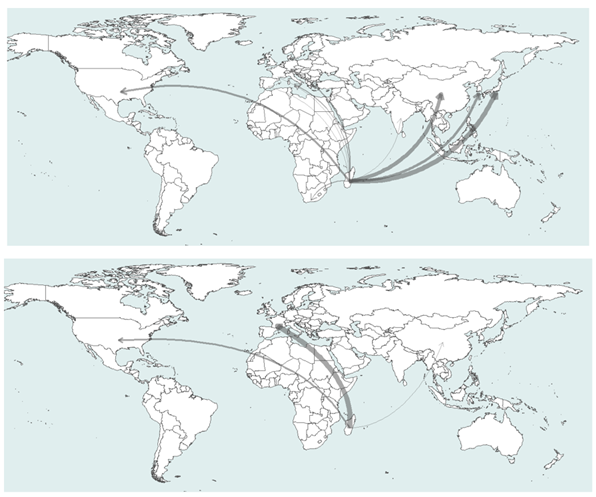
The argument is based on two case studies, each illustrating AI-induced cross-country flows of natural resources and data labour. The first involves Argentina as a supplier to the United States, while the second includes Madagascar and its primary export destinations: Japan and South Korea for raw materials, France for data work. These two cases portray the AI landscape as an asymmetric structure, where the countries that lead the tech race generate a massive demand for imports of raw materials, components, and intermediate goods and services. Core AI producers trigger the footprint and therefore should bear responsibility for it, but the pressure on (natural and social) resources and the ensuing impacts occur predominantly elsewhere. Cross-country value chains shift the burden toward more peripheral players, obscuring the extent to which AI is material- and labour-intensive.
Flows of raw materials (mainly nickel and cobalt from the Ambatovy mining project) from Madagascar to East Asia and, to a lesser extent, Europe and North America (top); flows of data work services from Madagascar to France, followed by North America and to a lesser extent, East Easia (bottom). Madagascar, one of the poorest countries in the world, contributes to state-of-the-art AI production without managing to move up the value chain.
This drain of resources toward AI engenders adverse effects in peripheral countries. Mining notoriously generates conflicts, and data work conditions are so poor that other segments of society – from local employers to workers’ families and even informal-economy actors – must step in to cover part of the costs. The current arrangements thus fail to ensure their own sustainability over time. Additionally, the aspirations of these countries to leverage their participation to the AI value chain as a development opportunity, and to transition toward leading positions, remain unfulfilled.
The dual footprint can fruitfully dialogue with the critical literature that leverages the concepts of extractivism (for example, Cecilia Rikap‘s concept of “twin” extractivism) and dependency (as theorised for example by Jonas Valente and Rafael Grohmann). Its contribution lies mainly in the effort to operationalise the ideas of more abstract social theories, while also facilitating mutual enrichment between different literatures.
The paper was developed as part of an initiative on ‘The Political Economy of Green-Digital Transition‘, organised by Edemilson Paraná in 2024 at LUT University in Finland. Further, the idea that the environmental and social dimensions of AI production emanate from similar underlying socio-economic processes and geographical trajectories constitutes the foundation of SEED – Social and Environmental Effects of Data Connectivity, a new DiPLab project that investigates how data extraction and material extraction are deeply interconnected. It stems from a collaboration with Núcleo Milenio FAIR at the Pontificia Universidad Católica de Chile and compares data and material infrastructures in Europe and South America.
Following the success of the inaugural INDL-MEA Conference in 2024, the second event of the Middle East and Africa chapter of the International Network on Digital Labor (INDL-MEA-2) will take place exclusively online on 25-26 November 2025. The conference will serve as a key regional forum for researchers, policymakers, and practitioners engaged in studying and shaping the future of digital labor, gig work, data work, content moderation, and technology-related jobs in the Middle East and Africa.
Digital labor continues to evolve as a defining feature of global and regional economies, shaping employment opportunities, economic structures, and policy debates. The Middle East and Africa present unique dynamics in digital labor, characterized by platformization, algorithmic management, labor informality, and digital entrepreneurship, alongside issues of regulation, fair work practices, and digital workers’ agency.
With INDL-MEA’s second edition, we aim to enhance interdisciplinary and policy-relevant insights into platform work, automation, labor protections, and digital rights in the region. The programme is available here, and it is still possible to register here.
There are two main ways in which a discipline like sociology engages with artificial intelligence (AI) and is affected by it. The sociology of AI understands technology as embedded in socio-economic systems and takes it as an object for research. Sociology with AI indicates that the discipline is also integrating AI into its methodological toolbox. Based on a talk that I gave at this year’s annual meeting of the European Academy of Sociology, I’ll give in what follows a brief overview of both. As a disclaimer, I have no pretention to be exhaustive. To narrow down the topic, I have chosen to focus on sociology specifically (rather than neighboring fields), and to rely only on already published, peer-reviewed research.
Let’s start with the sociology of AI, which I’ll illustrate with the help of the above artwork. Its aim is to demonstrate that even if there is a sense of magic in looking at the outputs of an AI system, the data on which it is based has a human origin. This work explores this idea through the symbolism of the mirror and reflection: beyond the magic, these outputs are a reflection of society. Sociological perspectives matter because they can help bring these social and human origins to the fore. In 2021, Kelly Joyce and her coauthors called for more engagement of sociologists in outlining a research agenda around these topics. Compared to other disciplines, we have a thicker understanding of the intersectional inequalities and social structures that interact with AI.
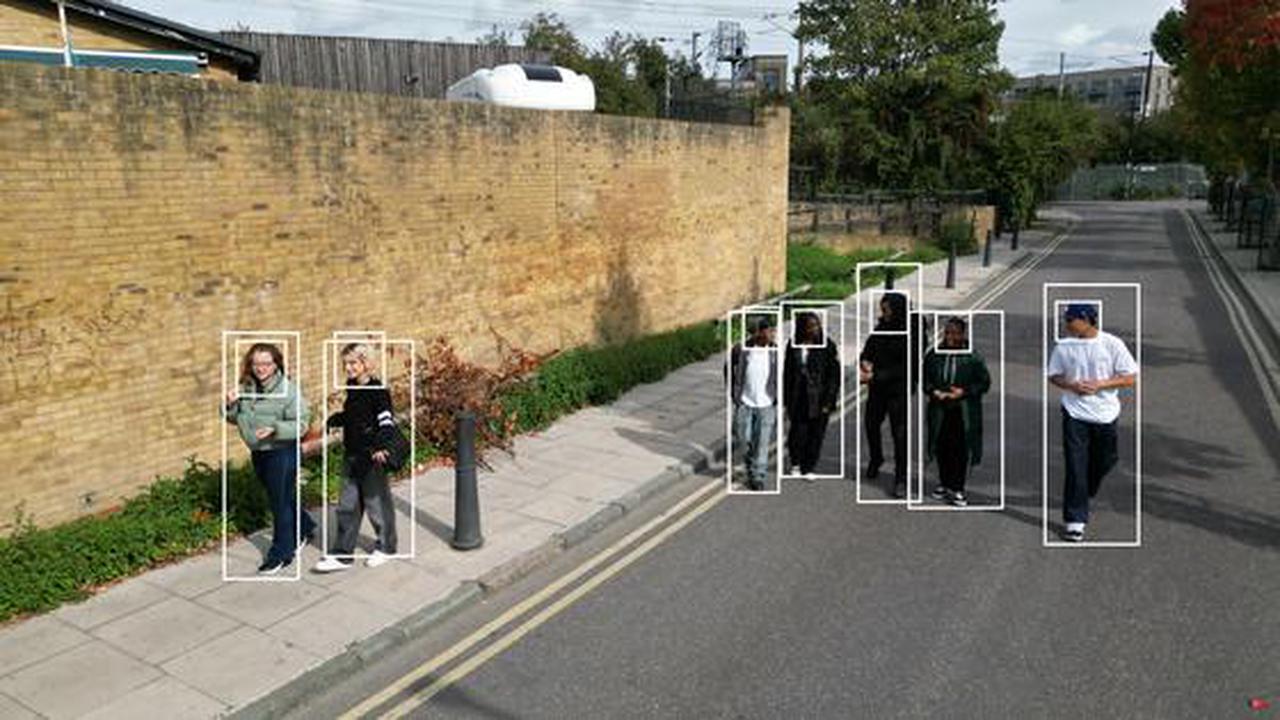
Why does the quasi-absence of sociology matter? I’ll answer this question through a 2022 paper, written by two sociologists but published in a computer science conference. The starting point is that early studies framed AI-related societal problems in terms of bias. For example, the above-mentioned report on predictive policing was entitled “machine bias”. This language points to technical corrections as remedy, but it cannot account for the social processes underway that comprise, among other things, increasing surveillance and privacy intrusion to collect more and more data (see image below). De-biasing may thus be insufficient to prevent injustice or inequality. A sociologically informed approach reveals that key questions are about power: who owns data and systems, whose worldviews are being imposed, whose biases we are trying to mitigate.
In recent years, more substantial contributions have been made within sociology. For example, there was a special issue of Socius last year on “Sociology of Artificial Intelligence”, and another one is forthcoming in Social Science Computer Review, entitled “What is Sociological About AI?”. I’ll mention a non-exhaustive selection of topics and findings. First, sociologists have recognized the hype – or how financial, political, and other interests have boosted the circulation of (often) exaggerated claims. This means shifting the gaze from AI as an intellectual endeavor, to see AI as a market – where bubbles can, well, form. This also means recognizing the political dimensions of AI development, with many states using public funding as a crucial engine for innovation.
Second, AI practitioners engage in a form of social construction of morality to legitimate their approaches to AI. For example, some distance themselves from Big Tech capitalism, some insist on the benefits of some AI applications, most prominently in healthcare. These efforts ultimately shape which technologies gain visibility and attract capital investments. This is also a way through which they produce and sustain the AI bubble itself – a culturally embedded market phenomenon. Third, sociological analysis can move beyond the technological determinism of early AI critics to emphasize the social and institutional contexts within which such algorithmic decision-making systems are deployed. This brings to light forms of negotiation, adaptation, and resistance, which have more subtle effects on inequalities.
In sum, sociologists increasingly contribute to these conversations, although these topics are not prominent in the discipline’s flagship conferences and journals, and important knowledge gaps remain. The guest-editors of the forthcoming Social Science Computer Review special issue on “What is sociological about AI?” claim that “A sociological lens can render AI’s hidden processes legible, just as sociologists have done with complex and taken for granted social forces since the discipline’s inception”. They nevertheless note that “we neither have a robust concept of AI as a social phenomenon nor a holistic sociological discourse around it, despite vibrant and dynamic work in the area.” In passing, most extant studies rely on traditional methods, primarily surveys and fieldwork. This is not an issue in itself, but it highlights a disconnection with the sub-topic I’ll highlight in my next post – Sociology using AI as instrument.
When we created ENDL (the European Network on Digital Labour), back in 2017, we booked a room with 17 places. A few days ago, the last conference of the network (which in the meantime has become INDL, replacing ‘European’ with ‘International’) hosted about 200 participants. Internationalisation has not only meant numerical growth, but also inclusion of a diverse range of voices: every year, we see more participants from countries that are often under-represented on the scientific scene, from India and South Africa to Argentina and Brazil. Participants have also diversified in another sense, too: if the majority have always been academics, it is a pleasure to see more and more workers, as well as labour organisers. This year, we could for example benefit from the presence of associations of data workers from Kenya, freelancers from France, and content moderators from Spain.
Participants to the INDL-8 conference, Saint-Cristina cloister, Bologna, IT, 10 September 2025.
A conference like this one is meant to give hope – hope of mutual understanding across countries and cultures, hope of dialogue across disciplines and fields, hope of connections between academic research and action. We worked together to ensure a welcoming environment for all, for instance by encouraging constructive comments, rather than sheer criticism, after each paper presentation. We also strived to keep costs down in order to make the conference free of charge, and with the DiPLab research programme, we could give a few small scholarships to promising presenters who might not have been able to travel otherwise.
Two speakers (M Francesco Sinopoli, Fondazione Di Vittorio, and Ms Kauna Malgwi, Uniglobal) at the plenary panel ‘Plenary panel: New Unionism, towards global alliances’, part of the INDL-8 Conference, DAMA Tecnopolo, Bologna, IT, 11 September 2025
Surely, problems remain. A couple potential participants had visa issues, while others had to cancel due to lack of funding. These problems weigh especially hard on people from emerging and lower-income countries outside Europe and North America. The future is also uncertain, as funding sources become increasingly dryer, and visa restrictions tighter. For this reason, the main INDL-9 conference next year (Geneva, ILO, 9-11 September 2026) will be accompanied by the growth of local chapters. The Middle-East and Africa area is preparing its second conference, this time online only, on 25-26 November. In the US, a one-day event will take place at Yale University on 29 April 2026. Colleagues in Chile and Argentina are launching a series of online events.
Closing keynote (Prof. Sandro Mezzadra, chair: Prof. Marco Marrone), Saint-Cristina Aula Magna, Bologna, IT, 12 September 2025
More information on the INDL-8 conference (including the full programme) is available here.
I presented today, at the WORK2025 conference in Turku, Finland, a paper on the human-in-the-loop systems that integrate human labor into the production of Artificial Intelligence (AI). Beyond engineers who design models, myriad “data workers” prepare training data, verify outputs, and correct errors. Their role is crucial but undervalued, with low pay and poor working conditions. Shaped by outsourcing and offshoring practices, the market for such services has grown steadily over time, with digital platforms acting as the main intermediaries between AI producers and workers. In their communication with clients, these platforms often emphasize that human workers provide nuanced judgment in complex tasks.
The three main functions of micro-work in the development of data-intensive, machine-learning based AI solutions. Source: https://doi.org/10.1177/2053951720919776
But who are the humans in the loop, and whose contributions count? Here, I focus on women’s participation and its evolution as the market expanded. Data work is theoretically well-suited for women, since it can be performed remotely from home. Besides, platforms generally do not share gender information, thereby limiting direct discrimination. One might thus expect women’s representation to be high. However, the statistical evidence is mixed. Across studies, the proportion of women data workers exceeds 50% only in four cases. Besides, reports sometimes differ for the same country, across platforms or at different moments in time. Looking at the lowest reported shares, then in no country except the US do women represent more than 40% of all data workers. Even in the US, recent data indicate that women constitute about half of the data workforce, down from 57-58% some years ago. Why are women underrepresented, and why does the pattern vary across countries?
Highest proportion of women data workers reported in existing studies (incl. own datasets). Source: author’s elaboration, created with MapChart.Lowest proportion of women data workers reported in existing studies (incl. own datasets). Source: author’s elaboration, created with MapChart.
The earliest explanation comes from P. Ipeirotis (2010), who analyzed Amazon Mechanical Turk, then the dominant platform. Most workers were from the US and India. In the US, data work paid too little to sustain a household and was often taken up by un- and under-employed women seeking supplementary income. In India, dollar-based pay was more attractive and often a main household income, drawing more men into the activity. Later, as the market expanded, this explanation appeared insufficient: the above maps show that not all rich countries have many female data workers, and some lower-income countries do. Yet, my data show a negative correlation: the larger the share of workers for whom data work is the main income source, the smaller the proportion of women. Ipeirotis’s hypothesis still holds but requires updating to today’s more competitive and globalized platform economy.
Proportion of workers for whom data work is the main source of income vs. proportion of women, by country. Source: own survey data (from projects TRIA and ENCORE, 2020-24).
Platforms fragment work into tasks and assign them to individuals framed as independent contractors competing for access. Unlike traditional firms, workers do not collaborate but face intense competition. Outcomes vary by national context. In countries facing stagnation or crisis, such as Venezuela, international platforms offer a rare source of income for highly qualified workers. Competition becomes fierce, and “elite” workers – often young men with STEM backgrounds – dominate. Women are disadvantaged, either due to fewer technical qualifications or because care responsibilities limit their ability to invest in building strong platform profiles and reputations. By contrast, in more dynamic economies such as Brazil, local job markets absorb highly skilled professionals, leaving platform work to more disadvantaged groups. Here, women with family duties are more visible. Thus, platform demographics reflect national conditions: in poorer or crisis-stricken countries, men from the educational elite seek career advancement, while in richer countries, women (especially mothers) take on such work primarily to supplement household income. Women may be equally educated, but they often lack the time to cultivate advanced STEM skills. As platforms demand longer and more specialized tasks, men increasingly gain the upper hand, crowding women out—even in countries where they were once the majority.
Platform design ignores these dynamics. Workers are treated as abstract entities, stripped of the socio-economic and cultural contexts that shape real inequalities. Competition, combined with local conditions, deepens gender gaps. Interventions must therefore consider gender disparities. Otherwise, they risk reinforcing inequalities. Supporting women’s access to data work—particularly those constrained by family responsibilities—can contribute to more balanced labor participation and ensure that AI benefits from a broader diversity of human input.









 Data Big and Small