The conference reaches Italy this year. It will take place in the most ancient University in the western world, Bologna, on 10-12 September 2025.
The overarching topic of this year’s conference is ‘Contesting Digital Labor: Resistance, counteruses, and new directions for research’. The goal is to explore how platform workers navigate, challenge, and reshape algorithmic management systems while forging innovative forms of solidarity and collective action. We also aim to explore the perspectives that technological developments open for workers in order to escape everyday surveillance, to resist top-down control and to organise to defend their rights.
In addition to presentations that directly address these questions, we welcome proposals that analyse a broader range of issues related to digital labour.
Another article has just been published! Another one that is based on a DiPLab-based group collaboration (with A.A. Casilli, M. Fernández Massi, J. Longo, J. Torres Cierpe and M. Viana Braz) and that uses data from multiple countries. It is entitled ‘The digital labour of artificial intelligence in Latin America: a comparison of Argentina, Brazil, and Venezuela’ and is part of a special issue of Globalizations on ‘The Political Economy of AI in Latin America’. This article lifts the veil on the precarious and low-paid data workers who, from Latin America, engage in AI preparation, verification, and impersonation, often for foreign technology producers. Focusing on three countries (Argentina, Brazil, and Venezuela), we use original mixed-method data to compare and contrast these cases in order to reveal common patterns and expose the specificities that distinguish the region.
The analysis unveils the central place of Latin America in the provision of data work. To bring costs down, AI production thrives on countries’ economic hardship and inequalities. In Venezuela and to a lesser extent Argentina, acute economic crisis fuels competition and favours the emergence of ‘elite’ (young and STEM-educated) data workers, while in more stable but very unequal Brazil, this activity is left to relatively underprivileged segments of the workforce. AI data work also redefines these inequalities insofar as, in all three countries, it blends with the historically prevalent informal economy, with workers frequently shifting between the two. There are spillovers into other sectors, with variations depending on country and context, which tie informality to inequality.
Our study has policy implications at global and local levels. Globally, it calls for more attention to the conditions of AI production, especially workers’ rights and pay. Locally, it advocates solutions for the recognition of skills and experience of data workers, in ways that may support their further professional development and trajectories, possibly also facilitating some initial forms of worker organization.
The version of record is here, while an open-access preprint is available here.
I am thrilled to announce that an important article has just seen the light. Entitled ‘Where does AI come from? A global case study across Europe, Africa, and Latin America’, it is part of a special issue of New Political Economy on ‘Power relations in the digital economy‘. It is the result of joint work that I have done with members of the Diplab team (A.A. Casilli, M. Cornet, C. Le Ludec and J. Torres Cierpe) on the organisational and geographical forces underpinning the supply chains of artificial intelligence (AI). Where and how do AI producers recruit workers to perform data annotation and other essential, albeit lower-level supporting tasks to feed machine-learning algorithms? The literature reports a variety of organisational forms, but the reasons of these differences and the ways data work dovetails with local economies have remained for long under-researched. This article does precisely this, clarifying the structure and organisation of these supply chains, and highlighting their impacts on labour conditions and remunerations.
Framing AI as an instance of the outsourcing and offshoring trends already observed in other globalised industries, we conduct a global case study of the digitally enabled organisation of data work in France, Madagascar, and Venezuela. We show that the AI supply chains procure data work via a mix of arm’s length contracts through marketplace-like platforms, and of embedded firm-like structures that offer greater stability but less flexibility, with multiple intermediate arrangements that give different roles to platforms. Each solution suits specific types and purposes of data work in AI preparation, verification, and impersonation. While all forms reproduce well-known patterns of exclusion that harm externalised workers especially in the Global South, disadvantage manifests unevenly depending on the structure of the supply chains, with repercussions on remunerations, job security, and working conditions.
Marketplace- and firm-like platforms in the supply chains for data work in Europe, Africa, and Latin America. Dark grey countries: main case studies, light grey countries: comparison cases. Organisational modes range from almost totally marketplace oriented (darker rectangle, Venezuela) to almost entirely firm oriented (lighter rectangle, Madagascar). AI preparation (darker circle) is ubiquitous, but AI verification (darker triangle) and AI impersonation (darker star) tend to happen in ‘deep labour’ and firm-like organisations where embeddedness is higher.
We conclude that responses based only on worker reclassification, as attempted in some countries especially in the Global North, are insufficient. Rather, we advocate a policy mix at both national and supra-national levels, also including appropriate regulation of technology and innovation, and promotion of suitable strategies for economic development.
The Version of record is here, while here is an open access preprint.
What shapes differences in how people get paid, are deemed productive, or receive respect? Alongside traditional explanations of social inequalities such as class, gender, age, disability, race, migration status, rural vs. urban residence, and others, a recent literature highlights the effects of digital divides. The digitally resourced have more opportunities across all life spheres, from consumption to education, work, and health. Ironically, though, digital technologies also generate new vulnerabilities by generalizing low-paid and contingent work. Digital labour platforms like Uber, Deliveroo and Upwork use data and algorithms to match clients with workers, construed as independent contractors, for one-off ‘gigs’ without any long-term commitment. These workers are largely exposed to the vagaries of the market and have limited or no social protection, although increasing efforts aim to bring labour law to bear on platforms.
Growing concerns that platform workers compare unfavourably to conventional employees have already attracted significant research and policy attention. But more remains to be done to fully understand how the recent rise of labour platforms has undermined the relationship between digitization and inequalities, adding a layer of complexity. Scattered, but growing evidence indeed suggests that platforms may be accelerating transmission to digital worlds of ’legacy’ inequalities for example vis-à-vis race and gender, while also fostering the proliferation of ’emerging’ inequalities that diminish users’ agency and augment the power of technology creators and big-tech multinationals. Especially platforms for remote online-only labour change the geographical scale at which these questions arise, projecting workers toward a competitive planetary market that relentlessly selects winners and losers.
To tackle these questions, I’m happy and honoured to announce that I have just been awarded a major grant (almost 570k euros, at marginal cost) by the French National Agency for Research (ANR) for a new 4-year study called VOLI: Voices from Online Labour. As a team effort that builds on a solid record of interdisciplinary collaborations, VOLI innovatively combines hypotheses and methods from sociology and neighbouring disciplines, notably large-scale corpus linguistics (I’ll explain why below), and relies on speech technology and artificial intelligence to tackle the rising economic risks that coalesce around the nexus between online platform labour, digitization, and social inequalities. The project leverages the power and potential of the very digital tools whose societal effects it studies, to develop an original and potentially transferable methodology.
The innovative idea that underpins the project is to tackle the problem through language, benefiting from recent advances in linguistics research and its capacity to recast methods and tools from artificial intelligence in a broad sense – including speech and language technology and machine learning techniques – to capture features and processes that used to escape its traditional methods. Despite the importance of linguistic tasks (such as translation, transcription, writing, and editing) in online labour platforms, linguistic methods have never been applied to the study of these workers before, and thus are best positioned to bring fresh insight. To this end, we have assembled a team composed of speech technology scientists, computational linguists specialized in multilingual and large-scale corpora analysis, and computational, digital, and labour sociologists. Expected results sustain our ambition to devise policy solutions to mitigate the effects of inequalities, and to support the individuals and groups that accumulate multiple sources of disadvantage.
To harness our previous research experience and ensure continuity, we focus on so-called ’micro-work’, the necessary but inconspicuous contribution of low-paid masses who annotate, tag, label, correct and sort data to fuel the digital economy, especially artificial intelligence. Because it is performed remotely and can be allocated to providers worldwide, micro-work differs from location-based platform ’gigs’ such as delivery and transport. It also differs from online-only jobs for freelancers, for example in computer programming and design, insofar as its extreme segmentation and standardization allow dispersing tasks to an undefined crowd instead of a selected individual (whence the alternative denomination of ’crowdwork’). Micro-tasks include, for example, recording one’s voice while reading aloud a sentence, labelling files, translating short bits of text, classifying contents in an image or webpage. They perform essential functions in the development of machine learning and artificial intelligence, from data generation and enrichment to quality controls of automated outputs. We give voice to these workers, often invisibilized by the automation narratives popular in the technology industry, in that we interview them about their lived experience, aspirations, motivations and perhaps regrets; and we rely on their voices as data for the simultaneous development of sociology, linguistics, and artificial intelligence (specifically, speech recognition) itself.
Indeed while bringing to the next level our sociological knowledge of the linkages between micro-work and digital inequalities, the methods that will be developed within this highly interdisciplinary project advance the study of the factors driving speech variation within the discipline of linguistics, augmenting language corpora with rich sets of metadata from sociological surveys, while also building and testing new and improved tools for automated transcription, with potential commercial applications.
I am the PI of the VOLI project which involves four research centres within France:
AI is not just a Silicon Valley dream. It relies among other things, on inputs from human workers who generate and annotate data for machine learning. They record their voice to augment speech datasets, transcribe receipts to provide examples to OCR software, tag objects in photographs to train computer vision algorithms, and so on. They also check algorithmic outputs, for example, by noting whether the outputs of a search engine meet users’ queries. Occasionally, they take the place of failing automation, for example when content moderation software is not subtle enough to distinguish whether some image or video is appropriate. AI producers outsource these so-called “micro-tasks” via international digital labor platforms, who often recruit workers in Global-South countries, where labor costs are lower. Pay is by piecework, without any no long-term commitment and without any social-security scheme or labor protection.
In a just-published report co-authored with Matheus Viana Braz and Antonio A. Casilli, as part of the research program DiPlab, we lifted the curtain on micro-workers in Brazil, a country with a huge, growing, and yet largely unexplored reservoir of AI workers.
We found among other things that:
Three out of five Brazilian data workers are women, while in most other previously-surveyed countries, women are a minority (one in three or less in ILO data).
9 reais (1.73 euros) per hour is the average amount earned on platforms.
There are at least 54 micro-working platforms operating in Brazil.
One third of Brazilian micro-workers have no other source of income, and depend on microworking platforms for subsistence.
Two out of five Brazilian data workers are (apart from this activity) unemployed, without professional activity, or in informality. In Brazil, platform microwork arises out of widespread unemployment and informalization of work.
Three out of five of data workers have completed undergraduate education, although they mostly do repetitive and unchallenging online data tasks, suggesting some form of skill mismatch.
The worst microtasks involve moderation of violent and pornographic contents on social media, as well as data training in tasks that workers may find uncomfortable or weird, such as taking pictures of dog poop in domestic environments to train data for “vacuuming robots”.
Workers’ main grievances are linked to uncertainty, lack of transparency, job insecurity, fatigue and lack of social interaction on platforms.
We examine the implications of the use of digital micro-working platforms for scientific research. Although these platforms offer ways to make a living or to earn extra income, micro-workers lack fundamental labour rights and ‘decent’ working conditions, especially in the Global South. We argue that scientific research currently fails to treat micro-workers in the same way as in-person human participants, producing de facto a double morality: one applied to people with rights acknowledged by states and international bodies (e.g. Helsinki Declaration), the other to ‘guest workers of digital autocracies’ who have almost no rights at all.
We are excited to announce the 6th Conference of the International Network on Digital Labor (INDL-6), scheduled to take place 9-11 October, 2023. The conference aims to bring together experts from various fields to discuss the latest research findings and share ideas on the topic of Digital Labor in the Wake of Pandemic Times. Following long-term technological trends as well as exogenous shocks, the field of digital labor is constantly expanding. This year’s INDL conference will be an excellent opportunity to exchange insights and perspectives, as well as a great way to make new friends among researchers, workers, policymakers, and practitioners who study the future of work, social justice, platforms, and artificial intelligence (AI).
The INDL-6 conference will be held in-person at the Weizenbaum Institute for the Networked Society in Berlin, Germany. It is co-organized by the International Labor Organization (ILO), the Digital Platform Labor (DiPLab) group, and Wissenschaftszentrum Berlin für Sozialforschung (WZB).
We encourage all interested researchers, post-graduate students, and practitioners to submit proposals that address aspects of digital labor, including but not limited to: gig economy, online labor, workplace surveillance, algorithmic management, AI-assisted recruiting, remote work, employee well-being, inequality, policy responses to Covid-19 crisis, regulation, organizing digital workers, gender and work, LGBTQ+ workers, intersectionality, disability, inclusion, AI, decolonial lens, informal labor markets, generative AI and work.
We welcome submissions that are interdisciplinary in nature and strongly encourage proposals by researchers and practitioners from the Global South across all topics.
The Call for Papers is available here and the deadline is 12 April.
Three to five dollars: that’s the answer. As simple as that. I am talking about the behind-the-curtain market for personal data that sustains machine learning technologies, specifically for the development of face recognition algorithms. To train their models, tech companies routinely buy selfies as well as pictures or videos of ID documents from little-paid micro-workers, mostly from lower-income countries such as Venezuela and the Philippines.
Josephine Lulamae of Algorithm Watch interviewed me for a comprehensive report on the matter. She shows how, in this globalized market, the rights of workers are hardly respected – both in terms of labour rights and of data protection provisions.
I saw many such cases in my research of the last two years, as I interviewed people in Venezuela who do micro-tasks on international digital platforms for a living. Their country is affected by a terrible economic and political crisis, with skyrocketing inflation, scarcity of even basic goods, and high emigration. Under these conditions, international platforms – that pay little, but in hard currency – have seen a massive inflow of Venezuelans since about 2017-18.
Some of the people I interviewed just could not afford to refuse a task paid five dollars – at a moment in which the monthly minimum wage of Venezuela was plummeting to as little as three dollars. They do tasks that workers in richer countries such as Germany and the USA refuse to do, according to Lulamae’s report. Still, even the Venezuelans did not always feel comfortable doing tasks that involved providing personal data such as photos of themselves. One man told me that before, in better conditions, he would not have done such a task. Another interviewee told me that in an online forum, there were discussions about someone who had accepted to upload some selfies and later found his face in an advertisement on some website, and had to fight hard to get it removed. I had no means to fact-check whether this story was true, but the very fact that it circulated among workers is a clear sign that they worry about these matters.
On these platforms that operate globally, personal data protection does not work very well. This does not mean that clients openly violate the law: for example, workers told me they had to sign consent forms, as prescribed in the European General Data Protection Regulation (GDPR). However, people who live outside of Europe are less familiar with this legislation (and sometimes, with data protection principles more generally), and some of my interviewees did not well understand consent forms. More importantly, they have few means to contact clients, who typically avoid revealing their full identity on micro-working platforms – and therefore, can hardly exert their rights under GDPR (right to access, to rectification, to erasure etc.).
The rights granted by GDPR are comprehensive, but do not include property rights. The European legislator did not create a framework in which personal data to be sold and bought, and rather opted for guaranteeing inalienable rights to each and every citizen. However, this market exists and is flourishing, to the extent that it is serving the development of state-of-the-art technologies. Its existence is problematic, like the ‘repugnant’ markets for, say, human organs or babies for adoption, where moral arguments effectively counter economic interest. It is a market that thrives on global inequalities, and reminds of the high price to pay for today’s technical progress.
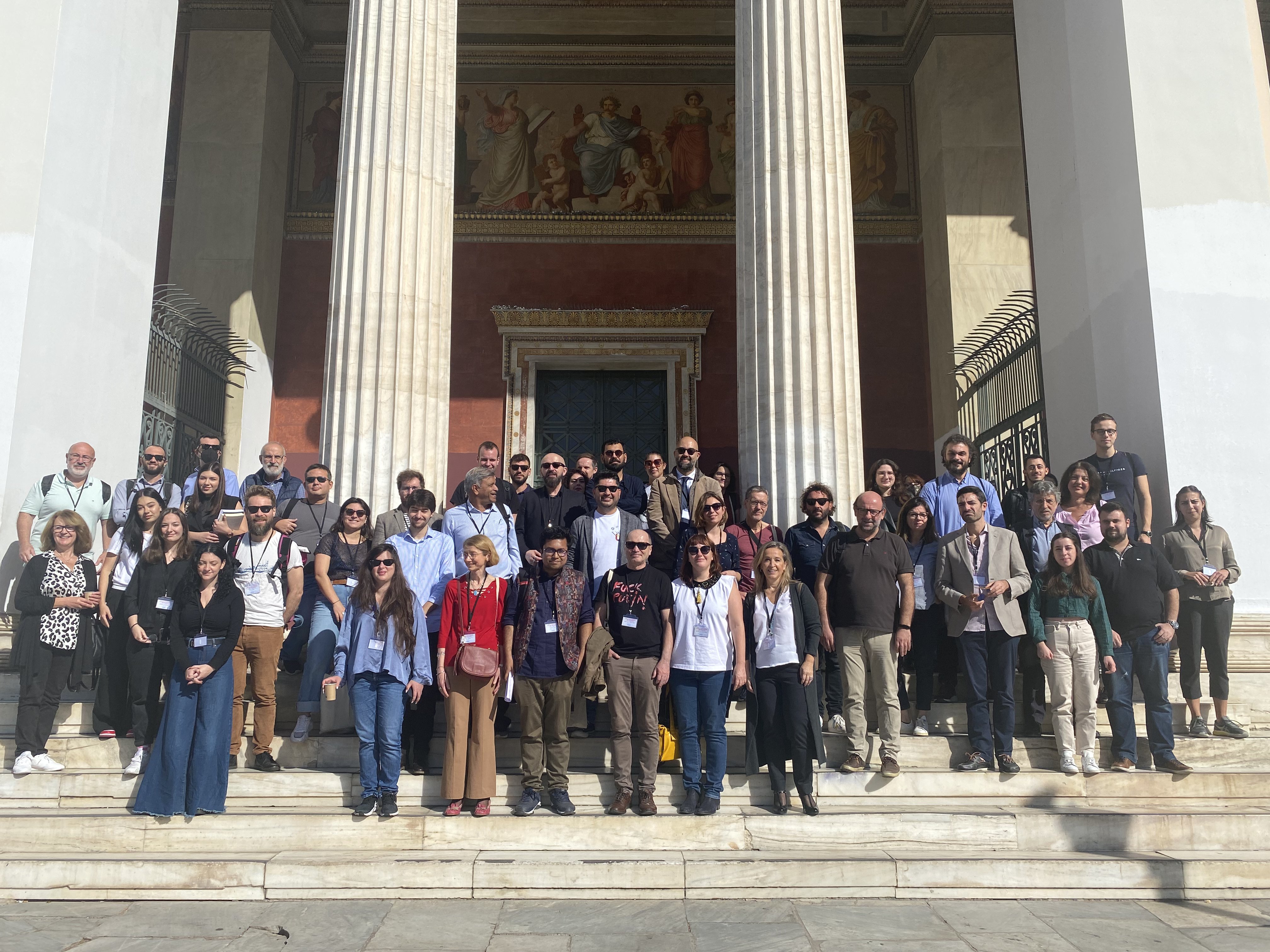
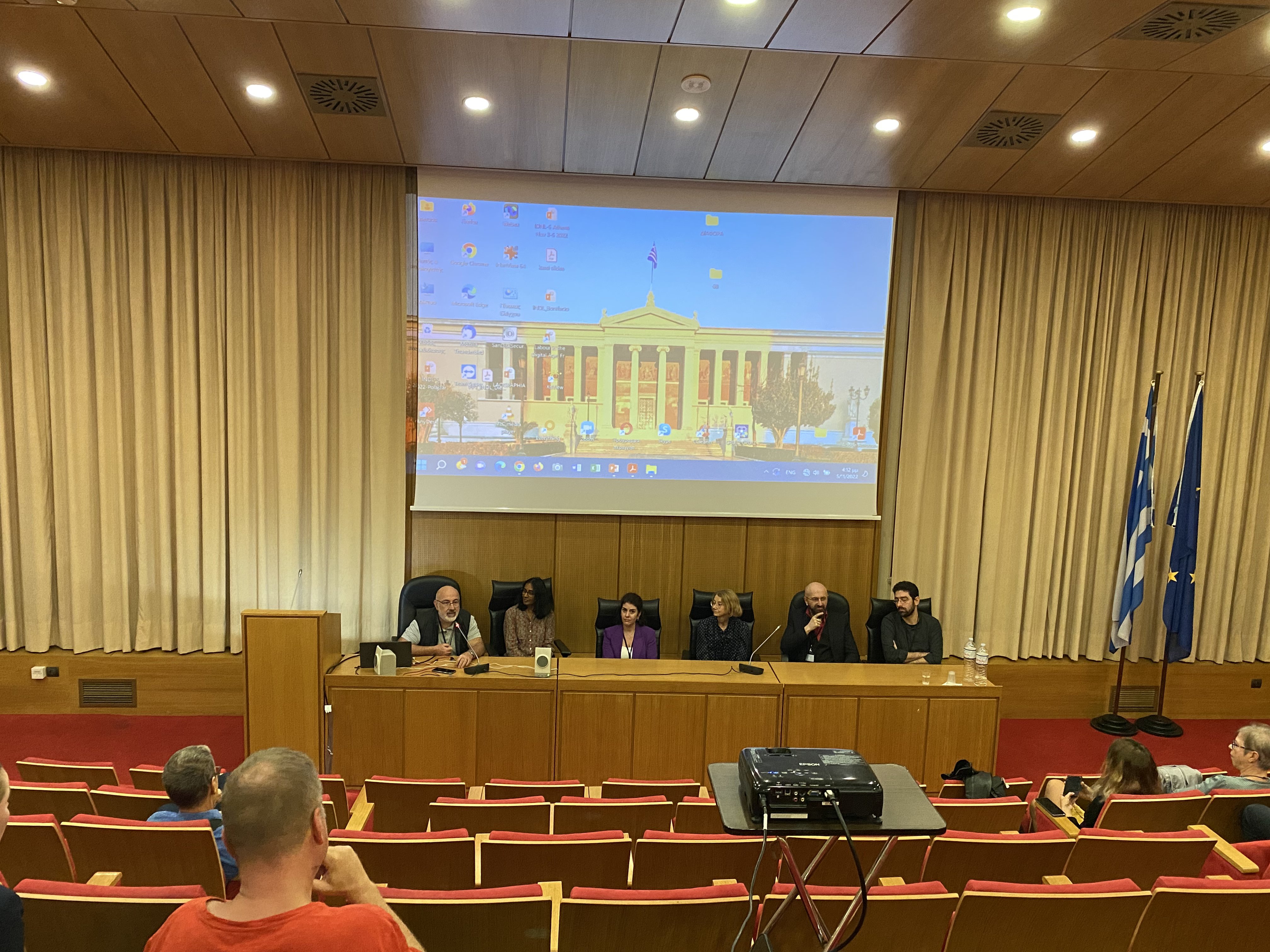
On 3-5 November 2022, I was at the department of Sociology of National and Kapodistrian University of Athens (NKUA) for the 5th INDL conference “Features and Futures of Digital Labor”. The conference was co-organized by us (the DiPLab project at the Polytechnic Institute of Paris) together with the International Labor Organization (ILO) and the Labor Institute of the General Confederation of Greek Workers.
The INDL (International Network on Digital Labor) project started as ENDL (the “E” standing for “European”) 5 years ago with an inaugural meeting in Paris. Since then, it has expanded internationally, and its members organized larger conferences in Paris (2019), Toronto (2019), Milan (2020, online), and Edinburgh (2021, online). INDL’s conference in Athens was the first in-person meeting since the beginning of the Covid-19 pandemic.
The key idea behind the creation of INDL, and the organization of these conferences, is that digital labor is central to the digital transformation of society. Despite its pervasiveness, though, the ways it is inscribed in the current organization of production and the state remain elusive. Different fields of the social and economic sciences, political theory, law, and philosophy have attempted to capture its distinctive attributes. The group’s initiatives contribute to this conversation by mapping the new working environments and fostering dialogue around the nature of digital work and the possible futures that academic research may help bring about.
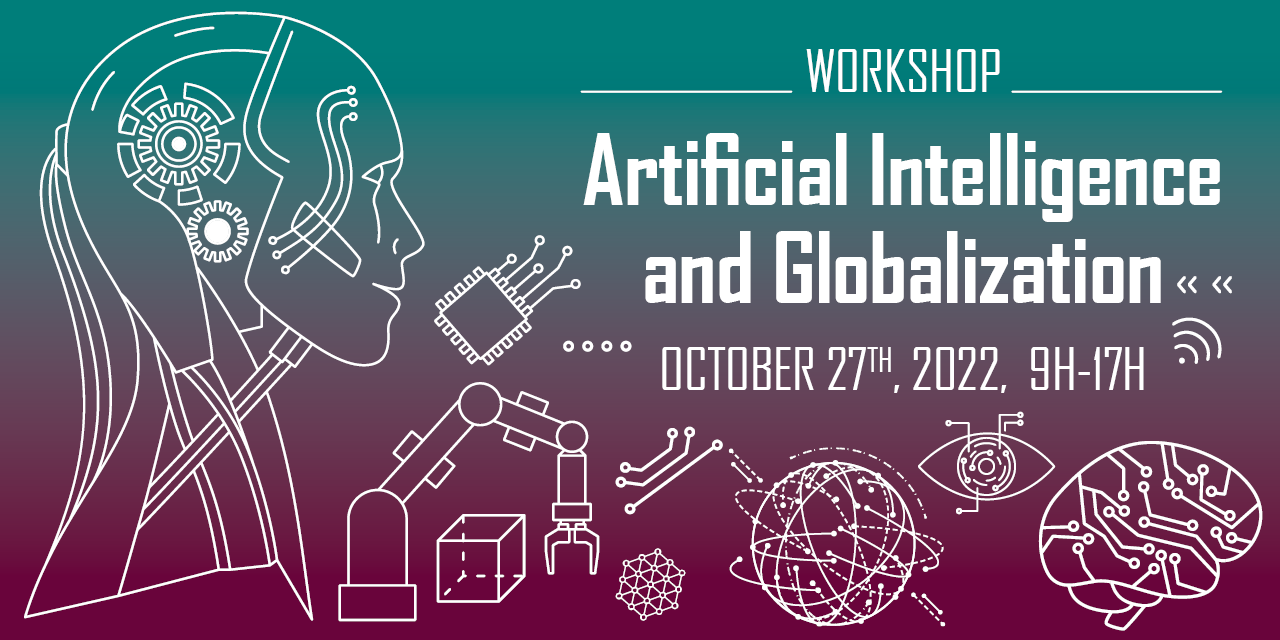
We organized the one-day conference AIGLe on 27 October 2022 to present the outcomes of interdisciplinary research conducted by our DiPLab teams in French-speaking African countries (ANR HuSh Project) and Spanish-speaking countries in Latin America (CNRS-MSH TrIA Project). Both initiatives study the human labor necessary to generate and annotate the data needed to produce artificial intelligence, to check outputs, and to intervene in real time when algorithms fail. Researchers from economics, sociology, computer science, and linguistics shared exciting new results and discussed them with the audience.
AIGLe is part of the project HUSh (The HUman Supply cHain behind smart technologies, 2020-2024), funded by ANR, and the research project TRIA (The Work of Artificial Intelligence, 2020-2022), co-financed by the CNRS and the MSH Paris Saclay. This event, under the aegis of the Institut Mines-Télécom, was organized by the DiPLab team with support of ANR, MSH Paris-Saclay and the Ministry of Economy and Finance.
PROGRAM 9:00 – 9:15 Welcome session
9:15 – 10:40 – Session 1 – Maxime Cornet & Clément Le Ludec (IP Paris, ANR HUSH Project): Unraveling the AI Production Process: How French Startups Externalise Data Work to Madagascar. Discussant: Mohammad Amir Anwar (U. of Edinburgh)
10:45 – 11:00 Coffee Break
11:00 – 12:30 – Session 2 – Chiara Belletti and Ulrich Laitenberger (IP Paris, ANR HUSH Project): Worker Engagement and AI Work on Online Labor Markets. Discussant: Simone Vannuccini (U. of Sussex)
12:30 – 13:30 Lunch Break
13:30 – 15:00 Session 3 – Juana-Luisa Torre-Cierpe (IP Paris, TRIA Project) & Paola Tubaro (CNRS, TRIA Project): Uninvited Protagonists: Venezuelan Platform Workers in the Global Digital Economy. Discussant: Maria de los Milagros Miceli (Weizenbaum Institut)
15:15 – 15:30 Coffee Break
15:30 – 17:00 Session 4 – Ioana Vasilescu (CNRS, LISN, TRIA Project), Yaru Wu (U. of Caen, TRIA Project) & Lori Lamel (LISN CNRS): Socioeconomic profiles embedded in speech : modeling linguistic variation in micro-workers interviews. Discussant: Chloé Clavel (Télécom Paris, IP Paris)





 Data Big and Small