AI, labour and natural resources in Santiago

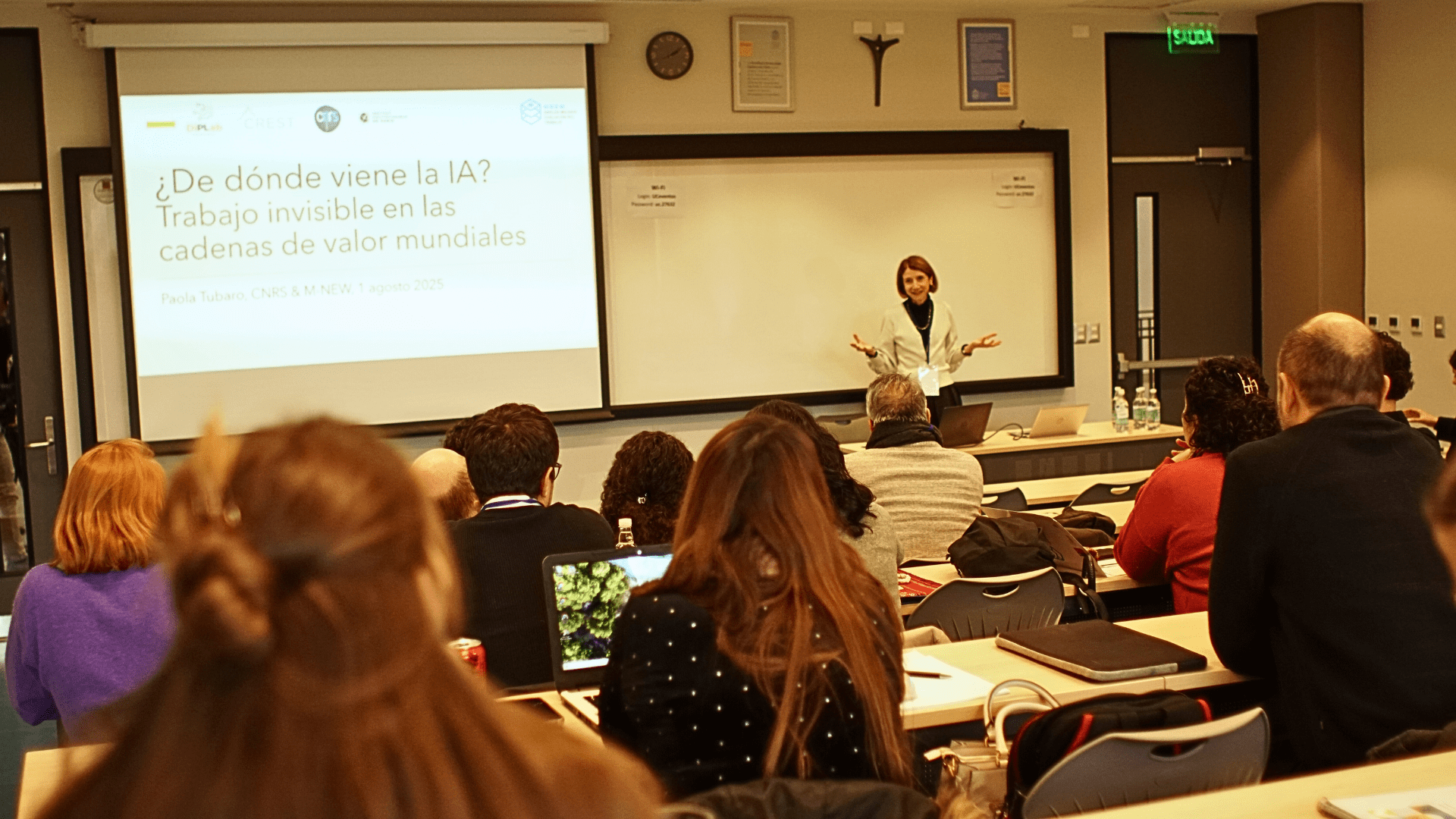
Last week in Santiago, Chile, I had the tremendous opportunity to give a keynote speech at the 4th annual workshop of the Millennium Nucleus on the Evolution of Work (M-NEW), of which I am also a senior international member. This interdisciplinary workshop brought together labour scholars from various parts of Latin America and beyond. I really liked the inspiring talks and the friendly and stimulating interactions with colleagues.

Credits: M-NEW

My own talk drew on my multi-year research programme on the crucial yet invisible human labor behind the global production of artificial intelligence. I first examined the evolution of this form of work over the last two decades, demonstrating that while its core functions in the development of smart systems have remained consistent, the scope and volume of such tasks have expanded significantly. I then analyzed the organization of this labour at the intersection of three trends in recent globalization: outsourcing, offshoring, and digitalization. These dynamics account for the marginalization of these workers within the tech industry and the relocation of their labor to lower-wage countries. Based on these insights, I described four cases—Venezuela, Argentina, Brazil, and Chile—highlighting the diverse effects of local conditions. I concluded by identifying emerging scientific and policy challenges, particularly concerning the recognition of skills, and the place of the informal economy.

Credits: M-NEW

The following week, still in Santiago, I was excited to participate in the kick-off meeting of the new research project SEED (“Social and Environmental Effects of Data connectivity: Hybrid ecologies of transoceanic cables and data centers in Chile and France”), a collaboration between my research group DiPLab and another Millennium Nucleus, FAIR (“Futures of Artificial Intelligence Research”). SEED received joint funding from the ECOS-SUD programme (France) and ANID (Chile) to analyse the AI value chain, from its production and development to its impact on employment, use and environmental consequences, by studying the Valparaíso-Santiago de Chile and Marseille-Paris axes.

Credits: FAIR

My presentation introduced the concept of the ‘dual footprint’ as a heuristic device to capture the commonalities and interdependencies between the different impacts of AI on the natural and social surroundings that supply resources for its production and use. I framed the AI industry as a value chain that spans national boundaries and perpetuates inherited global inequalities. The countries that drive AI development generate a massive demand for inputs and trigger social costs that, through the value chain, largely fall on more peripheral actors. The arrangements in place distribute the costs and benefits of AI unequally, resulting in unsustainable practices and preventing the upward mobility of more disadvantaged countries. The dual footprint grasps how the environmental and social dimensions of AI emanate from similar underlying socio-economic processes and geographical trajectories.

Sunbelt 2025 in Paris: inequalities, weak ties, and networked markets

I am attending a faboulous Sunbelt conference, taking place this year in Paris. I am deeply grateful to Emmanuel Lazega who made gigantic efforts to bring this important conference to France, after a failed attempt in 2020 when the Covid-19 pandemic brought everything online.

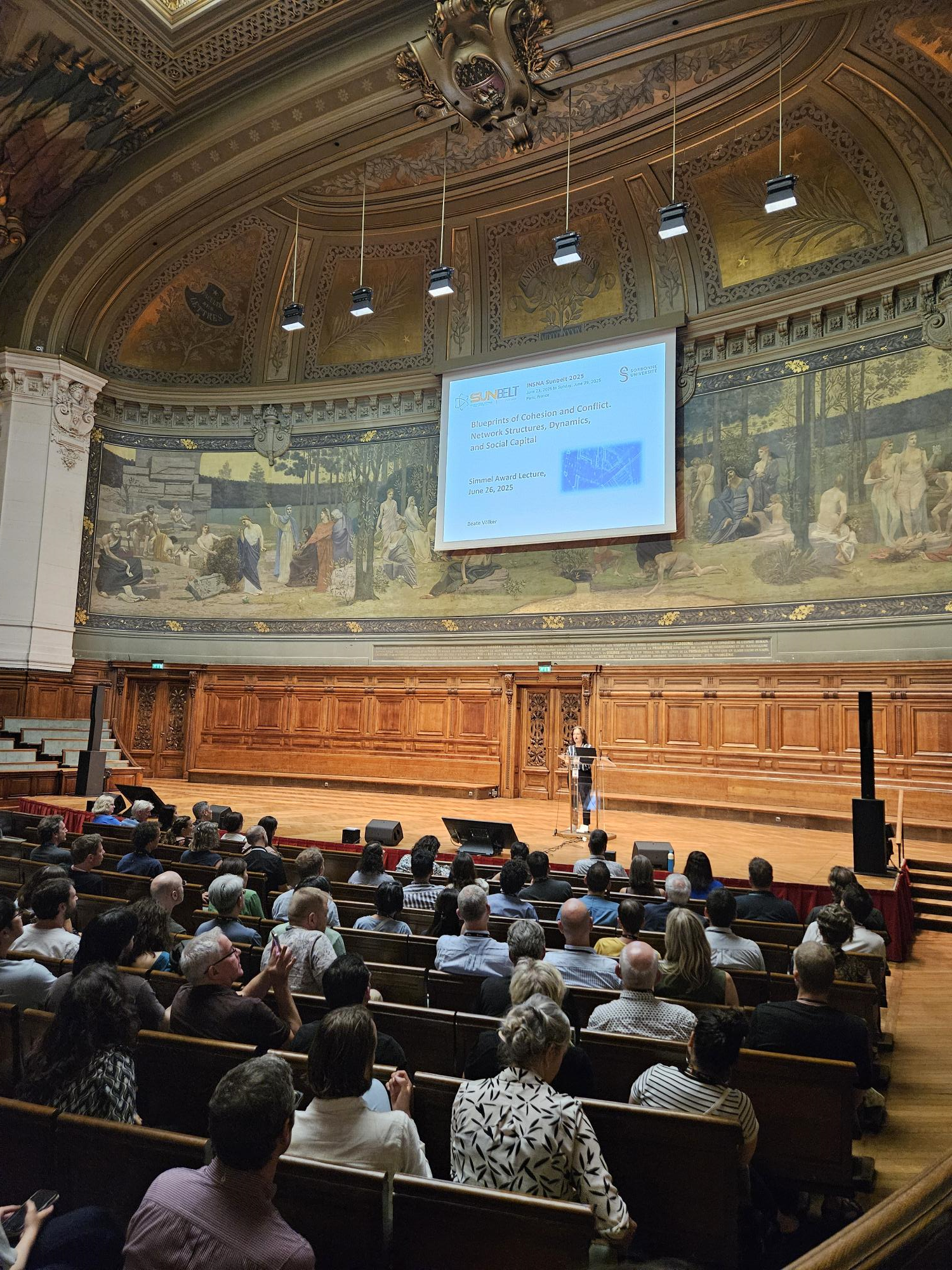
Yesterday, a very inspiring keynote by Beate Völker reminded us of the importance of weak ties and even absent ties – not only to smoothen the functioning of job markets but also, more surprisingly, to achieve social cohesion. The keynote took place in the historical Grand Amphithéâtre de la Sorbonne.

I am pleased to have contributed to a set of initiatives in honour of great network sociologist Harrison White, one year after his death. With Elise Penalva-Icher and Fabien Eloire, we presented a paper on digital platforms in White-like producer markets shaped by networks (more on it soon!). The paper was part of a dedicated session on the legacy of Harrison White. There was also a plenary in memoriam, where his former students and friends shared thoughts and stories. (Another plenary honoured Barry Wellman).

I was also honoured to be invited, today, to join a plenary panel on social networks and the study of social inequalities, organized by Gianluca Manzo. While most research on inequalities is attribute-based, social network approaches provide a powerful alternative (or perhaps, complement), highlighting how interpersonal, relational mechanisms generate patterns that over time, lock categorical differences into durable gaps in wealth, status, or other outcomes. We discussed complementarities and differences between these two approaches, the advantages of a network-oriented perspective, but also the methodological challenges that come with it.

On Sunday, I’ll present a paper that also deals with inequalities, in the specific case of online platform workers. We define an index of ‘vulnerability’ to unveil inequalities within this worker population in two countries, France and Spain. The paper develops and deeps results of a previous work, whose first outputs served to inform policy decisions in France.

Another paper to which I have contributed, and which will be presented at this Sunbelt, is more methodological and is the result of a collective effort. We analyze over 20 years of publications in the journal REDES and highlight how researchers have reported relational data from both personal and complete networks. We identify key challenges in the consistency and transparency of reporting and propose 7 practical recommendations to improve clarity, comparability, and replicability in social network research. This paper is already published in REDES.

Desinformación, trabajo y plataformas en Buenos Aires

Acabo de regresar de un viaje muy lindo a Argentina, donde fui invitada por el Instituto francés para participar en varios eventos.

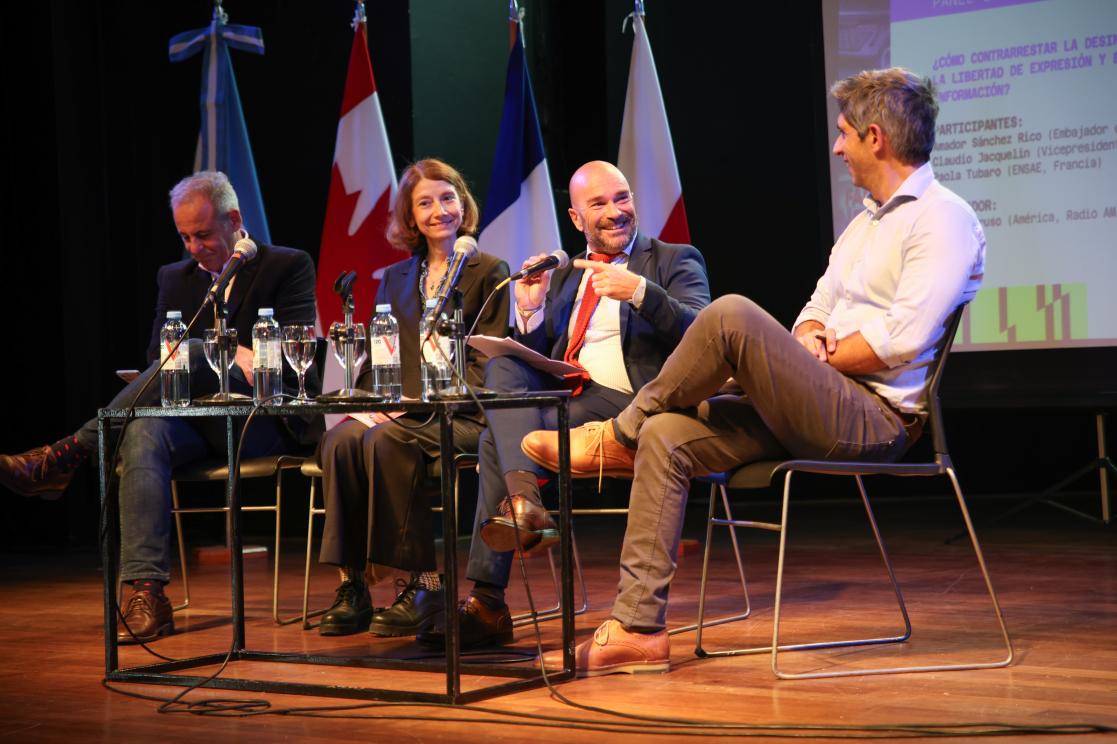
El 12 de mayo, participé en la conferencia “Manipulación Informativa e Injerencia Extranjera: Desafíos Globales y Respuestas Democráticas”, organizada por la Delegación de la Unión Europea en Argentina y por varias embajadas (como la de Francia). En el panel “Cómo contrarrestar la desinformación respetando la libertad de expresión y el derecho a la información”, hablé de cómo la desinformación se financia a través del mercado publicitario que sustenta toda la web, y de la necesidad de regular este mercado. También destaqué la importancia de fortalecer la investigación científica sobre este tema – como en el proyecto AI4TRUST, financiado por la propia UE.

Al día siguiente, tuve dos encuentros con estudiantes de periodismo, en la Universidad Nacional de Avellaneda y en la Universidad Abierta Interamericana, también sobre temas relacionados con la desinformación en internet. Fue un honor y un placer ver, en cada caso, la sala llena y mucho interés. Los/as estudiantes hicieron muchas preguntas y demostraron una gran disposición a aprender y progresar.

Los días 16 y 17 de mayo participé en tres paneles organizados en el marco de la Noche de las Ideas, una iniciativa del Instituto francés que se organiza todos los años y esta vez tuvo lugar en el famoso Teatro Colón de Buenos Aires. Fui en la sesión inaugural sobre el tema de este año, “El poder de actuar”. Además, participé como ponente en un debate muy interesante sobre el trabajo en plataformas digitales que se titulaba provocativamente ¿Nuevas servidumbres voluntarias? Jóvenes y precariedad y en otro sobre la inteligencia artificial: “In A.I. we trust?”. Actuar con y en contra de las nuevas tecnologías.

El 20 de mayo, di una charla sobre “El futuro del trabajo y la IA” como parte del ciclo UBA Digital, en la Universidad de Buenos Aires. Presenté algunos resultados de mi investigación sobre el trabajo digital y su papel en la producción de IA, desarrollada en el marco del programa de investigación DiPLab. Una vez más, me alegró ver a muchos participantes con preguntas muy interesantes. Fuimos acogidos por la facultad de odontología y también tuvimos la extraordinaria oportunidad de visitar la clínica.

Uninvited protagonists: the social networks of Venezuelan AI data workers

After years of work, the long-awaited good news: my article ‘Uninvited Protagonists: The Networked Agency of Venezuelan Platform Data Workers‘, co-authored with Juana Torres-Cierpe, has just been published in New Technology, Work and Employment!

Workers in Venezuela are powering AI production, often under tough conditions. Sanctions and a deep political-economic crisis have pushed them to work for platforms that pay in US dollars, albeit at low rates. They constitute a large reservoir for technology producers from rich countries. But they are not passive players.

They build resilience, rework their environment, and sometimes engage in acts of resistance, with support from different segments of their personal networks. From strong local ties to loose online connections, these informal webs help them cope, adapt, and occasionally push back. Their diversified relationships comprise an unofficial and often hidden, albeit largely digitised relational infrastructure that sustains their work and shapes collective action.

These findings invite to rethink agency as embedded in workers’ personal networks. To respond to adversities, one must liaise with equally affected peers, with family and friends who offer support, etc. Social ties ultimately determine who is enabled to respond, and who is not; whether any benefits and costs are shared, and with whom; whether any solution will be conflictual or peaceful. Social networks are not accessory but constitute the very channel through which Venezuelan data workers cope with hardship.

Not all relationships play the same role, though. Venezuelans discover online data work through their strong ties with family, close friends, and neighbours. To convert their online earnings into local currency, they rely on their broader social networks of relatives and friends living abroad and indirect relationships with intermediaries. For managing their day-to-day activities, Venezuelans expand their social networks through online services like Facebook, WhatsApp, and Telegram, connecting with diverse and less-close peers within and outside the country. Different social ties affect the various stages of the data working experience.

Overall, no Venezuelan could work alone – and the networked interactions that sustain each of them against hardship have made them massively present, as ‘uninvited protagonists,’ in international platforms. Their massive presence in the planetary data-tasking market is a supply rather than demand-driven phenomenon.

This analysis also sheds light on the reasons why mobilisation is uncommon among platform data workers. Other studies noted diverging orientations of workers, unclear goals, lack of focus, and insufficient leadership. Another powerful reason hinges upon the predominance of weak ties in building up online group membership: indeed, distant acquaintances are insufficient to prompt people to action if their intrinsic motivations are low.

The article is available in open access here.

Call for Abstracts: INDL-8 Conference in Bologna

It is my pleasure to announce that the call for abstracts for the upcoming INDL-8 conference is now open.

The conference reaches Italy this year. It will take place in the most ancient University in the western world, Bologna, on 10-12 September 2025.

The overarching topic of this year’s conference is ‘Contesting Digital Labor: Resistance, counteruses, and new directions for research’. The goal is to explore how platform workers navigate, challenge, and reshape algorithmic management systems while forging innovative forms of solidarity and collective action. We also aim to explore the perspectives that technological developments open for workers in order to escape everyday surveillance, to resist top-down control and to organise to defend their rights.

In addition to presentations that directly address these questions, we welcome proposals that analyse a broader range of issues related to digital labour.

To read the full Call and submit your abstract, please visit the conference management website.

The deadline is 27 April 2025.

NB: A small number of scholarships to partly cover travel/subsistence costs will be made available – stay tuned for more information.

NB2: The keynotes and plenaries will be announced very soon.

Please feel free to share with any scholars and postgraduate students who might be interested.

The digital labour of AI in Latin America

Another article has just been published! Another one that is based on a DiPLab-based group collaboration (with A.A. Casilli, M. Fernández Massi, J. Longo, J. Torres Cierpe and M. Viana Braz) and that uses data from multiple countries. It is entitled ‘The digital labour of artificial intelligence in Latin America: a comparison of Argentina, Brazil, and Venezuela’ and is part of a special issue of Globalizations on ‘The Political Economy of AI in Latin America’. This article lifts the veil on the precarious and low-paid data workers who, from Latin America, engage in AI preparation, verification, and impersonation, often for foreign technology producers. Focusing on three countries (Argentina, Brazil, and Venezuela), we use original mixed-method data to compare and contrast these cases in order to reveal common patterns and expose the specificities that distinguish the region.

The analysis unveils the central place of Latin America in the provision of data work. To bring costs down, AI production thrives on countries’ economic hardship and inequalities. In Venezuela and to a lesser extent Argentina, acute economic crisis fuels competition and favours the emergence of ‘elite’ (young and STEM-educated) data workers, while in more stable but very unequal Brazil, this activity is left to relatively underprivileged segments of the workforce. AI data work also redefines these inequalities insofar as, in all three countries, it blends with the historically prevalent informal economy, with workers frequently shifting between the two. There are spillovers into other sectors, with variations depending on country and context, which tie informality to inequality.


Our study has policy implications at global and local levels. Globally, it calls for more attention to the conditions of AI production, especially workers’ rights and pay. Locally, it advocates solutions for the recognition of skills and experience of data workers, in ways that may support their further professional development and trajectories, possibly also facilitating some initial forms of worker organization.


The version of record is here, while an open-access preprint is available here.

Where does AI come from?

I am thrilled to announce that an important article has just seen the light. Entitled ‘Where does AI come from? A global case study across Europe, Africa, and Latin America’, it is part of a special issue of New Political Economy on ‘Power relations in the digital economy‘. It is the result of joint work that I have done with members of the Diplab team (A.A. Casilli, M. Cornet, C. Le Ludec and J. Torres Cierpe) on the organisational and geographical forces underpinning the supply chains of artificial intelligence (AI). Where and how do AI producers recruit workers to perform data annotation and other essential, albeit lower-level supporting tasks to feed machine-learning algorithms? The literature reports a variety of organisational forms, but the reasons of these differences and the ways data work dovetails with local economies have remained for long under-researched. This article does precisely this, clarifying the structure and organisation of these supply chains, and highlighting their impacts on labour conditions and remunerations.

Framing AI as an instance of the outsourcing and offshoring trends already observed in other globalised industries, we conduct a global case study of the digitally enabled organisation of data work in France, Madagascar, and Venezuela. We show that the AI supply chains procure data work via a mix of arm’s length contracts through marketplace-like platforms, and of embedded firm-like structures that offer greater stability but less flexibility, with multiple intermediate arrangements that give different roles to platforms. Each solution suits specific types and purposes of data work in AI preparation, verification, and impersonation. While all forms reproduce well-known patterns of exclusion that harm externalised workers especially in the Global South, disadvantage manifests unevenly depending on the structure of the supply chains, with repercussions on remunerations, job security, and working conditions.

Marketplace- and firm-like platforms in the supply chains for data work in Europe, Africa, and Latin America. Dark grey countries: main case studies, light grey countries: comparison cases. Organisational modes range from almost totally marketplace oriented (darker rectangle, Venezuela) to almost entirely firm oriented (lighter rectangle, Madagascar). AI preparation (darker circle) is ubiquitous, but AI verification (darker triangle) and AI impersonation (darker star) tend to happen in ‘deep labour’ and firm-like organisations where embeddedness is higher.

We conclude that responses based only on worker reclassification, as attempted in some countries especially in the Global North, are insufficient. Rather, we advocate a policy mix at both national and supra-national levels, also including appropriate regulation of technology and innovation, and promotion of suitable strategies for economic development.

The Version of record is here, while here is an open access preprint.

2024 in review

My great regret is that I always have very little time to write posts, and the emptiness of this blog does not reflect the numerous, great and stimulating scientific events and opportunities that I have enjoyed throughout 2024. As a last-minute remedy (with a promise to do better next year…hopefully), I try to summarize the landmarks here, month by month.

In January, I launched the Voices from Online Labour (VOLI) project, which I coordinate with a grant of about €570,000 from the French National Agency for Research. This four-year initiative brings together expertise from sociology, linguistics, and AI technology across multiple institutions, including four French research centres, a speech technology company, and three international partners.

In February with the Diplab team, I spent two exciting days at the European Parliament in Brussels, engaging in profound discussions with and about platform workers as part of the 4th edition of the Transnational Forum on Alternatives to Uberization. I chaired a panel with data workers and content moderators from Europe and beyond, aiming to raise awareness about the difficult working conditions of those who fuel artificial intelligence and ensure safe participation to social media.

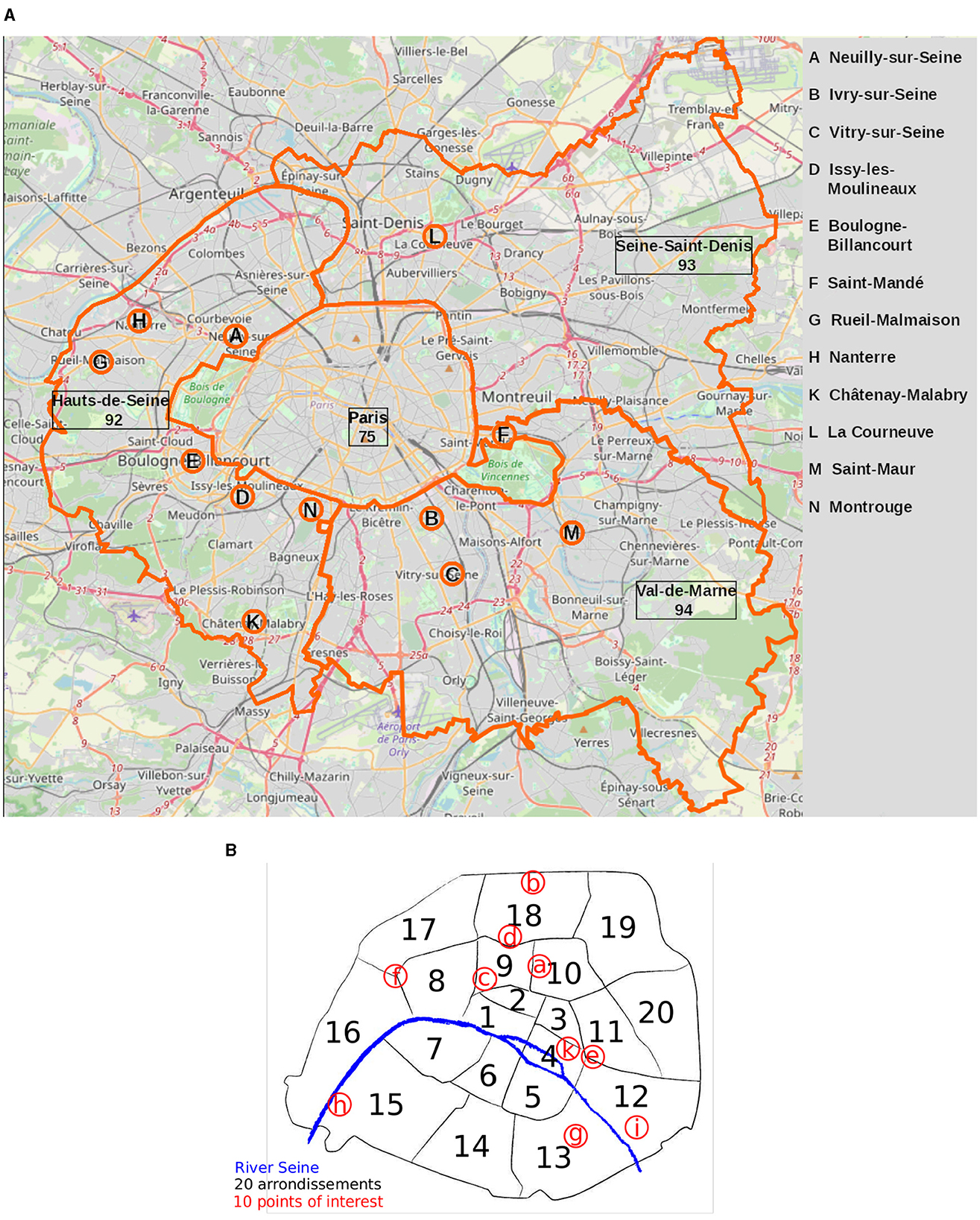
In March, three publications saw the light. One is a solo-authored chapter, in French, on ‘Algorithmes, inégalités, et les humains dans la boucle‘ (Algorithms, inequalities, and the humans in the loop) in a collective book entitled ‘Ce qui échappe à l’intelligence artificielle‘ (What AI cannot do). The other two are journal articles that may seem a little less close to my ‘usual’ topics, but they are important because they constitute experiments in research-informed teaching. One is a study of the 15-minute city concept applied to Paris, realized in collaboration with a colleague, S. Berkemer of Ecole Polytechnique, and a team of brilliant ENSAE students. The other is an analysis of the penetration of AI into a specific field of research, neuroscience, showing that for all its alleged potential, it created a confined subfield but did not entirely disrupt the discipline. The study, part of a larger project on AI in science, was part of the PhD research of S. Fontaine (who has now got his degree!), also co-authored with his co-supervisors F. Gargiulo and M. Dubois.

In April, I co-published the final report from the study realized for the European Parliament, ‘Who Trains the Data for European Artificial Intelligence?‘. Despite massive offshoring of data tasks to lower-income countries in the Global South, we find that there are still data workers in Europe. They often live in countries where standard labour markets are weaker, like Portugal, Italy and Spain; in more dynamic countries like Germany and France, they are often immigrants. They do data work because they lack sufficiently good alternative opportunities, although most of them are young and highly educated.

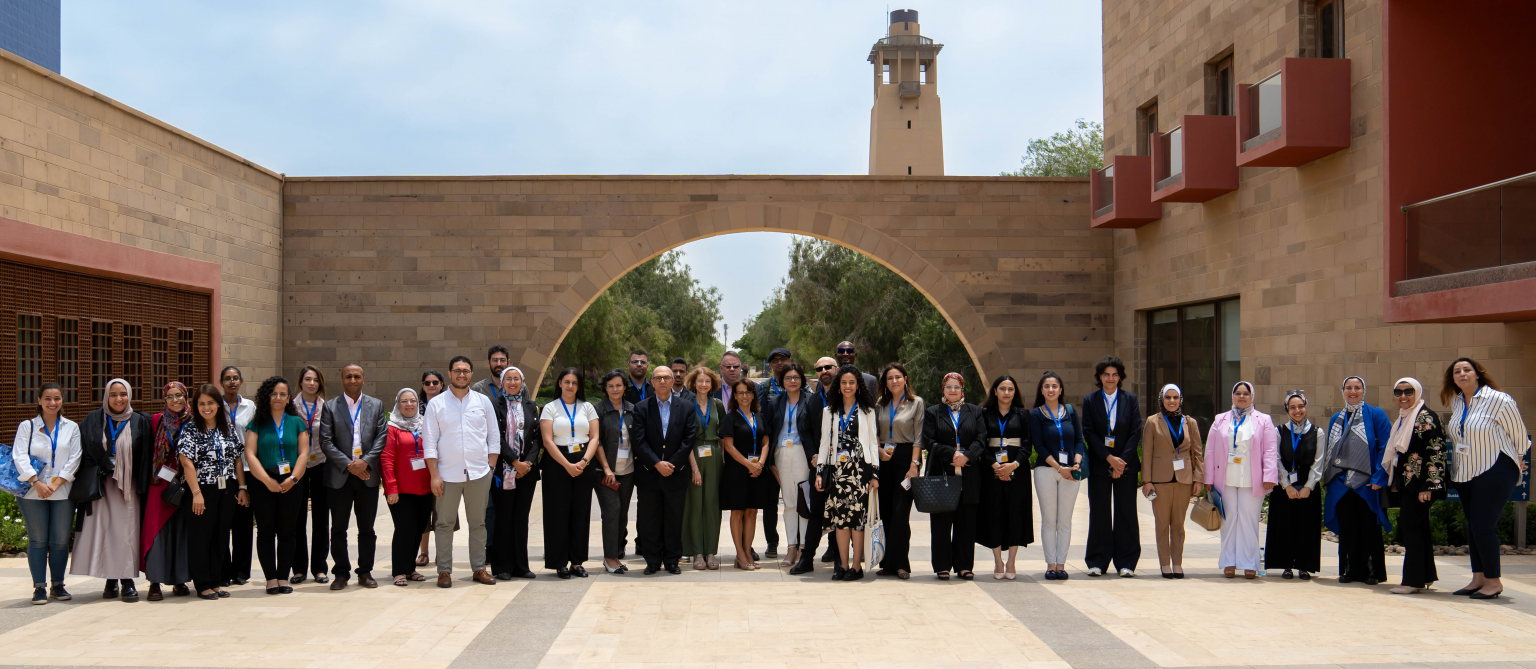
I then attended two very relevant events. On 30 April-1 May, I was at a Workshop on Driving Adoption of Worker-Centric Data Enrichment Guidelines and Principles, organised by Partnership on AI (PAI) and Fairwork in New York city to bring together representatives of AI companies, data vendors and platforms, and researchers. The goal was to discuss options to improve working conditions from the side of the employers and intermediaries. On 28 May, I was in Cairo, Egypt, to attend the very first conference of the Middle East and Africa chapter of INDL (International Network on Digital Labour), the research network I co-founded. It was a fantastic opportunity to start opening the network to countries that were less present before, and whose voices we would like to hear more.

June also provided exciting opportunities, with a workshop on ‘The Political Economy of Green-Digital Transition‘ at LUT University in Lappeenranta, Finland.

In July, the final version of our article on ‘Who bears the burden of a pandemic? COVID-19 and the transfer of risk to digital platform workers‘ came out in American Behavioral Scientist.

August is a quieter month (but I greatly enjoyed a session at the Paralympics in Paris!), so I’ll jump to September. Lots of activities: a trip to Cambridge, UK, and a workshop on disinformation at the Minderoo Centre for Technology and Democracy; a workshop on Invisible Labour at Copenhagen Business School in Denmark; and a one-day conference on gender in the platform economy in Paris. Another publication came out: a journal article, in Spanish, on Argentinean platform data workers.

More publications in October: a book chapter, in Portuguese, on ‘Fabricar os dados: o trabalho por trás da Inteligência Artificial‘, and a journal article, in French, on the ethics and methodology of using graph visualizations in fieldwork (an older topic to which I’m still attached – and which takes renewed importance with today’s fast renewal of research ethics!).

At the end of October, and until mid-November, I travelled to Chile for the seventh conference of the International Network on Digital Labour (INDL-7), which I co-organised. It was an immensely rewarding experience. I took the opportunity to strengthen my linkages and collaborations with colleagues there. It was a very intense, and super-exciting, time: after INDL-7 (28-30 October), I spent a week in Buenos Aires, Argentina, where I co-presented work in progress at the XV Jornadas de Estudios Sociales de la Economía, UNSAM. I then returned to Chile where I gave a keynote at the XI COES International Conference in Viña del Mar, Chile, on 8 November, and another at the ENEFA conference in Valdivia (Chile) on 14 November. I also gave a talk as part of the ChiSocNet series of seminars in Santiago, 11 November.

December was my return to teaching… and planning for the new year! Of note, I was interviewed for a Swiss podcast.

Meet the human workers behind AI

Last week with the Diplab team, we spent two exciting days at the European Parliament in Brussels, engaging in profound discussions with and about platform workers as part of the 4th edition of the Transnational Forum on Alternatives to Uberization.

Our stellar panel, co-organized with A. Casilli, M. Miceli, T. Le Bonniec and others, featured data workers and commercial content moderators Kauna Ibrahim Malgwi, Noraly Guevara and Sakine B., as well as researcher Jonas CL Valente from the Fairwork initiative.

Together, we delved into the intricacies of the human labor that fuels artificial intelligence and ensures safe participation to social media. Together, we discussed workers’ expectations, concerns and common struggles to move forward toward a world in which where technology serves all humans equally and responsibly.