The “pro-ana” phenomenon: Eating disorders and social networks

proanaA new book is just out, co-authored by myself and Antonio A. Casilli: a synthesis of our 5-odd years research on the self-styled internet communities, blogs and forums of persons with eating disorders. For years, lively controversies have surrounded these websites, where users express their distress without filters and go as far as to describe their crises, their vomiting and their desire for an impossibly thin body – thereby earning from the media a reputation for “promoting anorexia” (shortened as “pro-ana”). In France, an attempt to outlaw these online spaces last year was unsuccessful, not least because of our active resistance to it.

The book tells the story of our discovery of these communities, their members, their daily lives and their social networks. Ours was the first study to go beyond just contents, and discover the social environments in which they are embedded. We explored the social networks (not only online relationships, but day-to-day interactions at school or work, in the family, and among friends) of internet users with eating disorders, and related them to their health. The results defy received wisdom – and explain why banning these websites is not the right solution.

Internet deviance or public health budget cuts?

It turns out that “pro-ana” is less a form of internet deviance than a sign of more general problems with health systems. Joining these online communities is a way to address, albeit partially and imperfectly, the perceived shortcomings of healthcare services. Internet presence is all the more remarkable for those who live in “medical deserts” with more than an hour drive to the nearest surgery or hospital. At the time of the survey in France, a number of areas lacked specialist services for eating disorder sufferers.


Availability of specialized services and support for eating disorder sufferers in France in 2012. Source: AFDAS-TCA & FNA-TCA.
Availability of specialized services and support for eating disorder sufferers in France in 2014. Source: AFDAS-TCA & FNA-TCA.

These people do not always aim to refute medical norms. Rather, they seek support for everyday life, after and beyond hospitalisation. These websites offer them an additional space for socialisation, where they form bonds of solidarity and mutual aid. Ultimately, the paradoxical behaviours observed online are the result of underfunded health systems and cuts in public budgets, that impose pressure on patients. The new model of the ‘active patient’, informed and proactive, may have unexpected consequences.


A niche phenomenon with wider repercussions

In this sense, “pro-ana” websites are not just a niche phenomenon, but a prism through which we can read broader societal issues: our present obsession with body image, our changing relationships with medical authorities, the crisis and deficit of our publich health systems, as well as the growing restrictions to our freedom of expression online.

Continue reading “The “pro-ana” phenomenon: Eating disorders and social networks”
Visualization in mixed-methods research on social networks

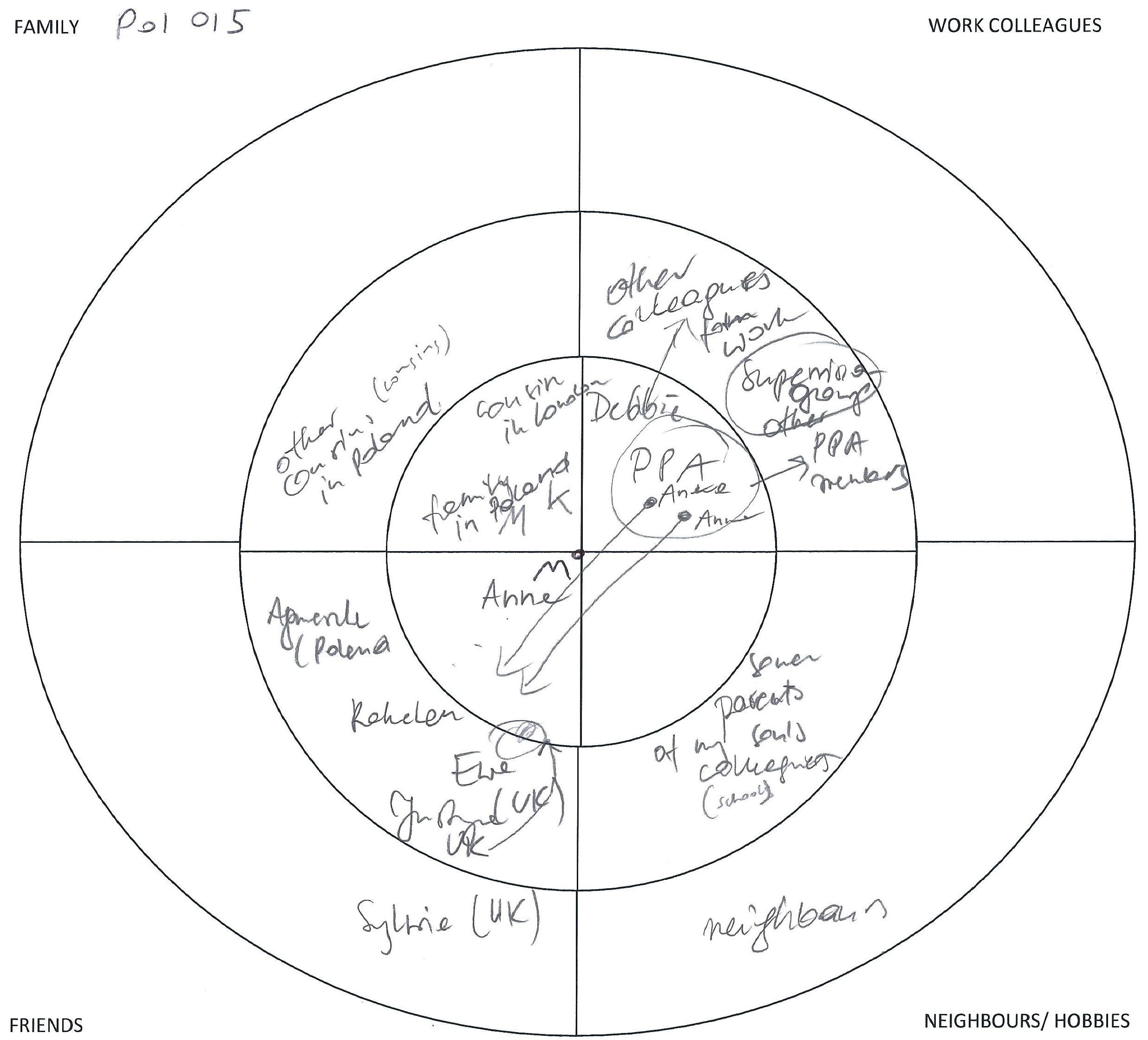
The journal Sociological Research Online has just published (31 May 2016) a special section on “Visualization in Mixed-Methods Research on Social Networks”, guest edited by Alessio D’Angelo, Louise Ryan and myself.
FigureL1
Figure 1 – Tubaro, Ryan & D’Angelo

The five papers in this peer-reviewed special issue explore the potential of visual tools to accompany qualitative and mixed-methods research. Visualization can support data collection, analysis and presentation of results; it can be used for personal or complete networks; it can be paper-and-pencil or computer-based. Overall, visualization helps to jointly understand network contents and network structures.

The special issue is freely accessible from all commercial (non-academic) internet providers.

Continue reading “Visualization in mixed-methods research on social networks”

Second European Social Networks Conference (EUSN 2016)

I am lucky enough to be part of the organizing committee of the second European Social Networks Conference, which will take place at Sciences Po Paris on 14-17 June 2016. The EUSN conferences have been created to offer a single place for the European community of social networks researchers to gather, in place of previous national annual conferences; and has been endorsed as a regional conference by INSNA, the international association of network researchers. A first, successful EUSN conference was held in Barcelona in 2014.

eusn2016_new

Somehow, the European social networks crowd seems more diverse than the US-based core of scholars who gave life to INSNA and drove its development over time. While remaining affectionate to the INSNA format and philosophy (for example, by selecting proposals only on the basis of an abstract, to be maximally inclusive), the European conferences can afford exploring new ideas, and variants on classical schemes. In particular, this year, we are trying to enlarge patricipation and attract delegates from a wider variety of disciplines, beyond those traditionally most represented – the social sciences, mathematics, and more recently statistics. Hence for example, the keynote speakers will give a sense of continuity – we will have social anthropologists Miranda Lubbers and José Luis Molina, the organisers of the first EUSN in Barcelona, on “Ethnography and multilevel networks in the study of migration and transnationalism”. But the plenary speech is an opening to recent, relevant developments in computer science: Jean-Daniel Fekete of INRIA will talk about “Challenges in social network visualization: bigger, dynamic, multivariate”.

Submissions are now invited for paper and poster proposals (abstract only – deadline 16 February 2016). There are special thematic sessions and general sessions, and all fields are welcome. A prize will be awarded for the best poster – where all participants will be able to vote.

The day before the conference, 15 training workshops are offered into the theory, data collection, methods of analysis and visualization of social networks.

IMPORTANT DATES:
16 February: Deadline for abstract/poster proposals, and pre-registration opening
1 March: Registration opening
16 March: Notification to authors
18 April: Early registration closure
14 June: Workshops
15-17 June: Conference

The data of my friend are my data

The rise of digital data, particularly data from the internet, is to be understood in social relational perspective. Online interactions – from email exchanges to use of VOIP services and participation in social media such as Facebook, Twitter and LinkedIn – make people’s social connections explicit and visible. The “social network”, once a metaphor used only in a small sub-field within sociology, is now familiar to everybody as the archetype of computer-mediated social interaction. Digital devices systematically record network structures, so that social ties become an essential part of every individual profile, and users are more and more aware of them.

One consequence of this is the booming popularity of network analysis concepts, which support the algorithms that handle digital data: for example, centrality measures are at the heart of search engine functionalities, and transitivity measures found “friend-of-a-friend” algorithms in social media. In passing, social network analysis itself which had been originally developed for small-sized, non-digital datasets (like surveys about friendship in schools) has undergone a major upgrade to account for social data from the web.

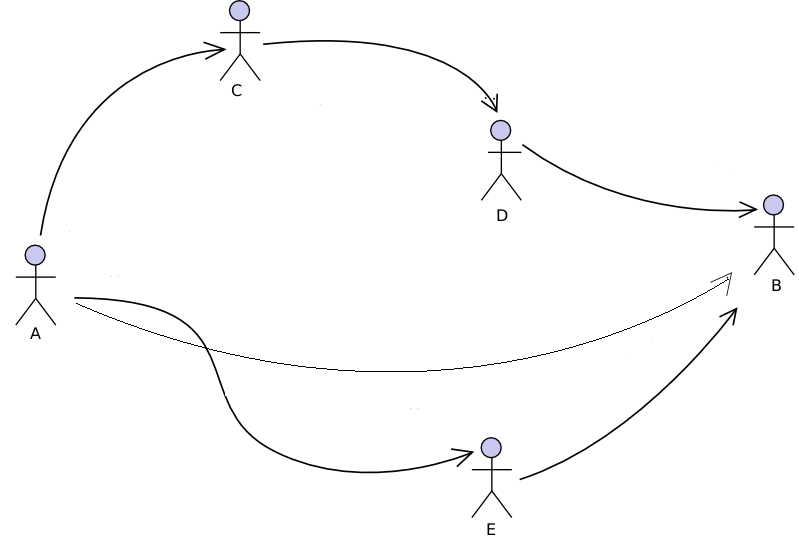
FOAFMore importantly, the relational nature of digital data and the underlying possibilities to use social network analysis, open up new avenues for data collection. If user B publishes a post on, say, their Facebook wall, comments and “likes” received from their friends A, D and E will be connected to the profile of B, accessible and visible from it; in other words, it is possible to retrieve information on A, D or E through the profile of just B. In general social networks, a friend of my friend is my friend; in digital networks, the data of my friends are my data.

Continue reading “The data of my friend are my data”

“Pro” ana? Sociability and support in eating disorder online communities

This article was first published on Discover Society, November 2014.

Last June, a group of Italian MPs proposed jail terms and fines for authors of so-called “pro-ana” (anorexia) and “pro-mia” (bulimia) websites. These are self-styled online communities on eating disorders which are viewed as promoting extreme dieting and unhealthy eating practices. France and the United Kingdom preceded Italy’s attempt to pass restrictive legislation as far back as 2008-9, and many internet service providers also endeavoured to ban these contents.

But the potential spread of health-hazardous behaviours is probably only one side of the coin, and these websites might also channel health-enhancing assistance, advice, and support (Yeshua-Katz & Martins 2013). In fact a closer look reveals that website users carefully manage their online socialisation to address their health challenges. Online social spaces enable discussion around the illness and constitute a complement, albeit an admittedly imperfect one, to formal healthcare services. There is no rejection of standard health norms in the name of some extreme ideal of thinness but rather a need – or perhaps, a cry – for extra support.

A social science approach brings out these results. The effect of web interactions on health does not only depend on website contents, but also on how people actually use them, share them, and access resources through them. The social, rather than just clinical dimension of eating disorders, recognized long before the advent of the web (Bell 1985, Orbach 1978), becomes ever more relevant in the current context and calls for a more comprehensive view of the “ana” and “mia” social universe.

SupportANAMIA(Credit: Roberto Clemente)

Continue reading ““Pro” ana? Sociability and support in eating disorder online communities”

Qualitative networks

Social Network Analysis (SNA) is booming, and many think it’s because of internet networks and big data. Yet social networks themselves are not new: people have always formed ties to one another, and online platforms such as Facebook, Twitter and LinkedIn only offer channels for networked interactions to occur. Counts and fancy visualisations of myriad likes and shares do not tell the whole story either: networks are primarily about exploring how ties connect us as individuals and as organisations or groups, and how our social relationships affect our lives and behaviours.

In this sense, smaller studies can still have much to teach us. These include not only quantitative, but also qualitative approaches. “Social” networks involve a world of meanings, feelings, relationships, attractions, dependencies, which have traditionally been at the heart of qualitative research and are amenable to a mixed-methods approach.

In this perspective, with the Social Network Analysis Group of the British Sociological Association (BSA-SNAG), I am organising a one-day small conference on “Mixed Methods Approaches to Social Network Analysis”, exploring how the combination of SNA and qualitative methods can enrich and deepen our understanding of network content in conjunction with network structure. The event will take place on 12 May 2014 at Middlesex University, London, and the programme is available here; to register online (deadline 30 April!) click here.

The transformative powers and the politics of data visualisation: a case with personal network data

Data visualisation is still relatively uncommon in the social sciences, and is not normally expected to be part of the standard work of a scholar (contrary, some would say, to what happens in the sciences, where visualisation is sometimes necessary to figure out the properties of objects whose existence is proven, but which cannot be seen). Yet data visualisation has an extraordinary history of accomplishments even in the social realm, as cleverly documented in a forthcoming article by James Moody and Kieran Healy; and classics such as Pierre Bourdieu valued it and attempted to use it in at least some of their work, as Baptiste Coulmont interestingly reported in a blog post.

Yet the digital age offers new opportunities for data visualisation, that are largely unexploited in the social sciences. It becomes not only a tool for the researcher — to explore data prior to conducting statistical analyses, or to present results once the work is done —  but also for the general user, the study subject, the beneficiary of any policy under discussion, and the general public. As theorists in the arts and digital humanities (but not much in the social sciences, I am afraid) have noticed, the Internet and all digital infrastructures are becoming today interfaces with databases, and users of all types are immersed in a world of data in a way that was unknown before. This means that data visualisations can have new and more transformative uses, empowering study subjects and people in general, by offering them intuitive and aesthetically appealing tools to better navigate this digital world. But it also involves new dangers, as to who sets the agenda and what aspects or characteristics of the data are being stressed; data are not just objective, ‘raw’ materials but mediated ones, and the choice of how to make them perceptible by the senses is not neutral.

At the annual conference of the British Sociological Association today in Leeds, in the Methodological Innovations Stream, I am presenting data visualisation work I have done with colleagues Antonio A. Casilli, Lise Mounier and Fred Pailler, as well as data visuliaser Quentin Bréant, as part of the research project ANAMIA. We developed three tools — one for data collection, one for data exploration and preliminary analysis, one as a basis for heuristics and presentation of results. The first was for our study subjects, the second for us researchers and our colleagues, the third for us and the larger public. My slides are available:

Front


Whose fantasy are you living in? Your employer’s or Mark Zuckerberg’s?

A now classical result of the sociology of social networks is the distinction between formal social structures defined by kinship, inherited hierarchy or companies’ organisational charts, and informal structures arising from nets of friendship, trust, solidarity, similarities and dissimilarities. As far back as 1954, John A. Barnes (who incidentally, is credited with coining the wording ‘social networks’) in a renowned study of a small community of fishers in a Norwegian parish demonstrated that exogenously defined positions such as those arising from political administration, economic activity or family are insufficient to explain the social structure of the community, which largely depends on less codified relationships of friendship and acquaintance. In organisational studies, it appeared that the formal chart of a company and the actual networks of advice, trust or communication of members may differ widely, and surveys aimed at eliciting network ties (with ‘name generators’ for example) became a privileged means to bring to light the ‘company behind the chart‘ (Krackhardt & Hanson 1993) and to make ‘invisible work visible‘ (Cross, Parker & Borgatti 2002). Social network scholars advised managers on how, by using employee questionnaires, they could generate network maps and get to the root of many organisational problems. Another major finding was about the emergence of informal roles – the leader, the deviant, the broker – and their important contribution to driving the behaviours and outcomes of human groups, beyond all prescribed, formal authorities (Johnson, Boster & Palinkas 2003).

FormalInformal

The formal chart of a company and the network obtained by asking each employee, “With whom do you discuss work-related issues?” Central individuals (who receive most nominations) are NOT the formal leaders.
 

The research and consultancy activity that built on these ideas had a strong impact on organisational culture worldwide, especially as companies tended to flatten and rely on teams and cross-divisional, project-based work, so that managers’ authority mattered less and understanding these informal networks became a potential key for success. Many would admit today that the organisational chart is the fantasy of the employer, not an actionable tool, and even less so a reliable reflection of reality. But then, what are the advice, trust, and communication networks mapped by the researcher – shouldn’t we say they are the fantasy of the sociologist? These networks are built from questionnaires and therefore rely on the subjective responses of participants; and it is well known in the area of survey design research, that question wording orients responses, that different cultures and groups tend to interpret questions differently, and that people may give biased answers due to forgetting, deliberate concealing of sensitive information, ambiguity of definitions, and diversity in perceptions. The survey is the traditionally primary tool of investigation of the social networks scholar, but brings with it its limitations and distortions.

One may think that the formal organisational chart and the informal advice (or trust or communication) network are just two different ways of construing social structure and objectivating it. They are informed by different political and epistemological orientations: those of (old-style) employers for the former, those of social researchers (and perhaps enlightened employers) for the latter. The resulting formal-informal dichotomy would then be the result of a cleavage between two competing approaches to the management of organisations (and more generally of human groups or communities), one more hierarchical and functional, the other flatter and more collaborative.

Continue reading “Whose fantasy are you living in? Your employer’s or Mark Zuckerberg’s?”

Small data and big models: Sunbelt 2014

Uh, it’s been a while… I should have written more regularly! All the more so as many things have happened this month, not least the publication of our book on the End-of-Privacy hypothesis. Well, I promise, I’ll catch up!

Meanwhile, a short update from St Pete Beach, FL, where the XXXIV Sunbelt conference is just about to end. This is the annual conference of the International Network for Social Network Analysis and in the last few years, I noticed some sort of tension between the (let’s call it like that — no offense!) old-school of people using data from classical sources such as surveys and fieldwork, and big data people, usually from computer science departments and very disconnected from the core of top social network analysts, mostly from the social sciences. This year, though, this tension was much less apparent, or at least I did not find it so overwhelming. There weren’t many sessions on big data this time, but a lot of progress with the old school — which in fact is renewing its range of methods and tools very fast. No more tiny descriptives of small datasets as was the case in the early days of social network analysis, but ever more powerful statistical tools allowing statistical inference (very difficult with network data — I’ll go back to that in some future post), hypothesis testing, very advanced forms of regression and survival analysis. In this sense, a highly interesting conference indeed.  We can now do theory-building and modeling of networks at a level never experienced before, and we don’t even need big data to do so.

The keynote speech by Jeff Johnson, interestingly, was focused on the contrast between big and small data. Johnson has strong ethnographic experience with small data, including in very exotic settings such as scientific research labs at the South Pole and fisheries in Alaska. He combined social network analysis techniques, sometimes using highly sophisticated mathematical tools, with fieldwork observation to gain insight into, among other things, the emergence of informal roles in communities. His key question here was, can we bring ethnographic knowing to big data? And how can we do so?

My own presentation (apart from a one-day workshop I offered on the first day, where I taught the basis of social network analysis) took place this afternoon. I realize, and I am pleased to report, that it was in line with the small-data-but-sophisticated-modeling mood of the conference. It is a work derived from our research project Anamia, using data from an online survey of persons with eating disorders to understand how the body image disturbances that affect them are related to the structure of their social networks. The data were small, because they were collected as part of a questionnaire; but the survey technique used was advanced, and the modeling strategy is quite complex. For those who are interested in the results, our slides are here:

Network data, new and old: from informal ties to formal networks

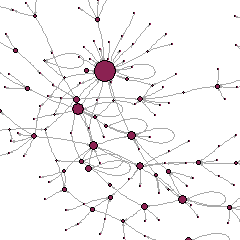
Fig1Network data are among those that are changing fastest these days. When I say I study social networks, people almost automatically think of Facebook or Twitter –without necessarily realizing that networks have been around for, well, the whole history of humanity, long before the internet. Networks are just systems of social relationships, and as such, they can exist in any social context — the family, school, workplace, village, church, leisure club, and so forth. Social scientists started mapping and analysing networks as early as the 1930s. But people didn’t think of their social relationships as “networks” and didn’t always see themselves as “networkers” even if they did invest a lot in their relationships, were aware of them, and cared about them. The term, and the systemic configuration, were just not familiar. There was something inherently informal and implicit about social ties.

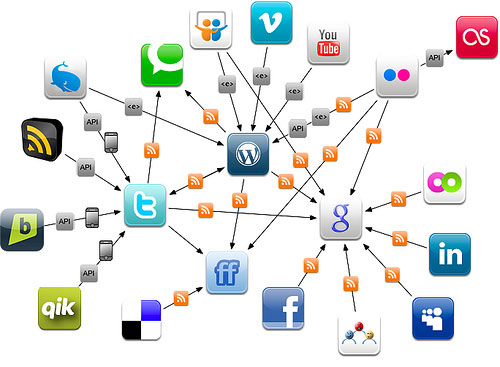
What has changed with Facebook and its homologues, is that the network metaphor has become explicit. People are nowSocial-Media-Network accustomed to talking about “networks”, and think in systemic terms, seeing their own relationships as part of a more global structure. Network ties have become formal — you have to make a clear choice and action when you add a “friend” on Facebook, or “follow” someone on Twitter; you will have a list of your friends/followers/followees (whatever the specific terminology is) and monitor changes in this list. You know who the friends of your friends are, and can keep track of how many people viewed your profile /included you in their “lists” / mentioned you in their Tweets. Now, everyone knows what networks are –so if you are a social network researcher and conduct a survey like in the old days, you won’t fear your respondents may misunderstand. In fact, you may not even need to do a survey at all –the formal nature of online ties, digitally recorded and stored, makes it possible to retrieve your network information automatically. You can just mine network tie data from Facebook, Twitter, or whatever service your target populations happen to be using.

Continue reading “Network data, new and old: from informal ties to formal networks”